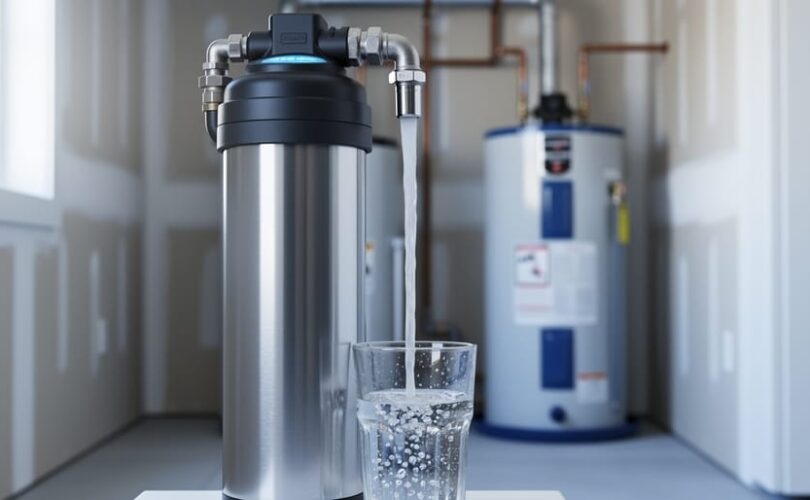
Every tap in your home delivers water that has traveled through aging municipal pipes, picked up chlorine and disinfection byproducts at treatment facilities, and potentially collected sediment, heavy metals, and chemical contaminants along the way. A whole house filtration system intercepts these pollutants at your home’s main water line, transforming every shower, glass of drinking water, and load of laundry into an experience with genuinely clean water.
Unlike point-of-use filters that treat water at a single faucet, these comprehensive systems protect your entire household. The technology works through multiple filtration stages: sediment pre-filters capture rust and particles, activated carbon removes chlorine and organic compounds, and specialized media target specific contaminants like heavy metals or hardness minerals. Systems certified to NSF/ANSI standards 42, 53, and 401 demonstrate verified performance against dozens of health-affecting substances.
The benefits extend far beyond taste. Removing chlorine before it reaches your shower prevents respiratory irritation and protects skin and hair from daily chemical exposure. Your appliances last longer without mineral buildup and corrosive compounds wearing down internal components. You’ll eliminate thousands of single-use plastic bottles annually while reducing the environmental footprint of bottled water transportation.
Choosing the right system means understanding your water quality first. Municipal water reports reveal regulated contaminants, but independent laboratory testing uncovers the complete picture, including emerging compounds like PFAS that standard reports often miss. System capacity, certification credentials, and maintenance requirements vary significantly across technologies.
In 2026, whole house filtration represents a practical investment in long-term health and sustainability. The science supporting point-of-entry treatment continues advancing, with new media formulations and smart monitoring capabilities making comprehensive water protection more accessible than ever. This guide explains exactly how these systems work, what certifications matter, and how to select the solution that matches your household’s specific needs.
What Makes a Whole House Filtration System Different
A whole house filtration system works by treating water entering a house at the main line before it branches out to individual fixtures. This point-of-entry approach means every tap, shower, washing machine, and appliance receives filtered water from the moment it enters your home. The difference from point-of-use solutions like under-sink or countertop filters is both simple and profound: instead of treating water at a single location, you’re protecting every water source throughout your entire living space.
Point-of-use filters work well for specific needs, a countertop filter for drinking water or a showerhead filter for chlorine removal. However, they leave gaps in your home’s water protection. Your dishwasher still receives unfiltered water that can leave mineral deposits on glassware. Your shower delivers chlorinated water that dries out skin and hair. Your washing machine struggles against hard water that fades fabrics faster.
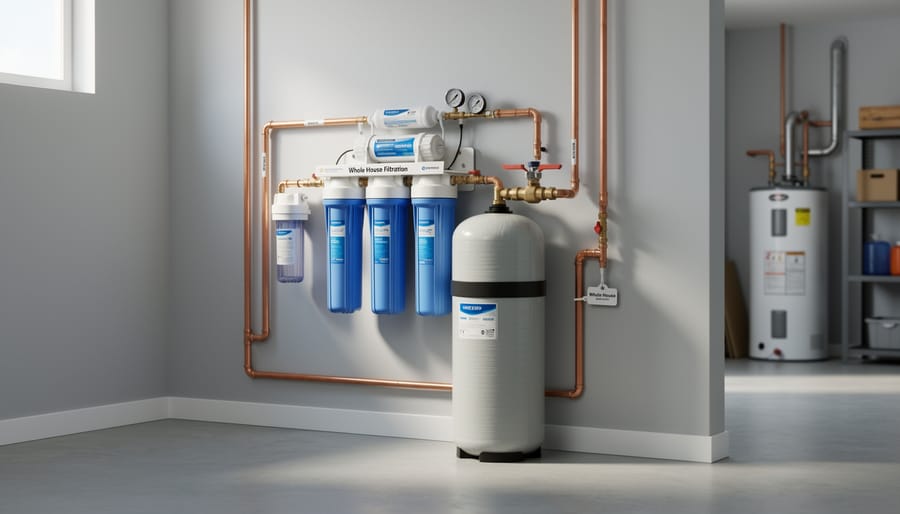
Point-of-entry systems eliminate these gaps by intercepting contaminants before they reach any fixture. The science behind this comprehensive approach is straightforward: municipal water arriving at your home flows through a multi-stage treatment system installed on your main water line. Sediment filters capture rust, dirt, and particles. Carbon media removes chlorine, volatile organic compounds, and chemical pollutants. Additional stages can address specific concerns like heavy metals or microbiological contaminants depending on your water quality needs.
This whole-home protection delivers benefits you’ll notice immediately. Water from every tap tastes cleaner. Showers feel gentler on skin. Appliances run more efficiently without scale buildup. You’re no longer choosing which faucets deserve clean water, every water source in your home meets the same quality standard you’d expect from your drinking glass.
The Technologies That Power Whole House Systems
UV Microbiological Systems
UV technology harnesses the germicidal power of ultraviolet light to eliminate microbiological threats from your water supply without introducing any chemicals. When water flows through a UV chamber, high-intensity UV-C light disrupts the DNA of bacteria, viruses, and protozoa, rendering them unable to reproduce or cause infection. UV kills bacteria and viruses by breaking molecular bonds in their genetic material, and this process happens in seconds as water passes through the system.
Unlike chlorine or other chemical disinfectants, UV leaves no residual taste or byproducts in your water. The technology is particularly effective against viruses in water that resist conventional filtration, including norovirus and rotavirus, while also addressing bacterial concerns like E. coli and Cryptosporidium. UV systems require minimal maintenance, typically just an annual bulb replacement, and operate continuously to protect every tap in your home from microbiological contamination.
Multi-Stage Filtration Approaches
The most effective whole house systems layer complementary technologies to address the full spectrum of water contaminants. A typical multi-stage approach starts with a sediment pre-filter that captures rust, sand, and particulates down to 5 microns, protecting downstream components and extending their lifespan. Next, an activated carbon stage removes chlorine, volatile organic compounds, and chemicals that affect taste and odor while also reducing synthetic pesticides and industrial solvents.
Advanced systems add a third stage using catalytic carbon or specialty media designed to target specific regional concerns like heavy metals, fluoride, or agricultural runoff. This staged approach works because each technology excels at removing different contaminant categories, sediment filters handle physical particles, carbon addresses chemical compounds, and UV systems (discussed separately) eliminate biological threats.
The sequence matters tremendously. Pre-filtration prevents carbon media from clogging prematurely, while removing sediment before UV treatment ensures microorganisms can’t hide behind particles and escape exposure. By combining technologies in the right order, multi-stage systems deliver comprehensive protection that no single filter type can achieve alone, ensuring every tap in your home dispenses water that’s genuinely clean.
Understanding NSF Certification and What It Means for Your Water
When you’re evaluating a whole house filtration system in 2026, NSF certification gives you science-backed proof that a product actually does what the manufacturer claims. NSF International establishes drinking water standards and tests products against rigorous protocols, so you’re not relying on marketing promises alone.
The most critical standard for comprehensive home systems is NSF/ANSI 53 health effects which certifies that a filter reduces contaminants with documented health impacts. This includes lead, mercury, asbestos, volatile organic compounds, and numerous man-made chemicals that pose real risks to your family. Systems meeting this standard undergo independent testing to verify they remove specific percentages of targeted pollutants under real-world conditions.
NSF isn’t the only independent certifier you’ll encounter. IAPMO and WQA also test and certify products to NSF standards, providing additional third-party validation. These organizations ensure consistent, unbiased evaluation across the industry.
| NSF Standard | Contaminants Addressed | Why It Matters |
|---|---|---|
| NSF/ANSI 42 | Chlorine, taste, odor, particulates | Improves aesthetic quality and makes water more pleasant |
| NSF/ANSI 53 | Lead, mercury, VOCs, cysts, health-effect chemicals | Protects against documented health risks |
| NSF/ANSI 55 | Bacteria, viruses, microorganisms | Ensures microbiological safety through UV treatment |
| NSF/ANSI 58 | Wide range including fluoride, arsenic, radium | Certifies reverse osmosis system performance |
Understanding these certifications empowers you to compare systems on objective criteria rather than brand reputation alone. A whole house system carrying NSF/ANSI 53 certification for specific contaminants means independent labs verified its ability to reduce those pollutants to safer levels. You’re not guessing whether the technology works.
Check certification details carefully, though. Some products might be certified for certain contaminants but not others, so match the certifications to your specific water quality concerns. The more transparent a manufacturer is about which standards their system meets and which contaminants it’s certified to reduce, the more confident you can be in your investment.
Health and Environmental Benefits You’ll Notice Immediately
The moment you turn on a tap, you’ll taste the difference. Water from every faucet becomes cleaner and fresher, free from the chlorine taste and musty odors that often plague municipal supplies. Your morning coffee improves, your cooking water tastes pure, and guests notice the quality before you mention your system.
Your skin and hair respond within days. Chlorine and other treatment chemicals in unfiltered shower water strip natural oils, leaving skin dry and hair brittle. Filtered shower water protects these natural barriers, reducing irritation and creating a gentler bathing experience. People with sensitive skin or conditions like eczema often report noticeable relief after switching to whole-house filtration.
The benefits extend beyond personal health. Your water heater, dishwasher, washing machine, and plumbing fixtures all suffer from sediment buildup and corrosive contaminants in untreated water. Filtered water flowing through these systems reduces mineral deposits, extends equipment lifespan by years, and cuts repair costs. The calcium and magnesium scaling that would otherwise clog aerators and showerheads simply doesn’t accumulate at the same rate.
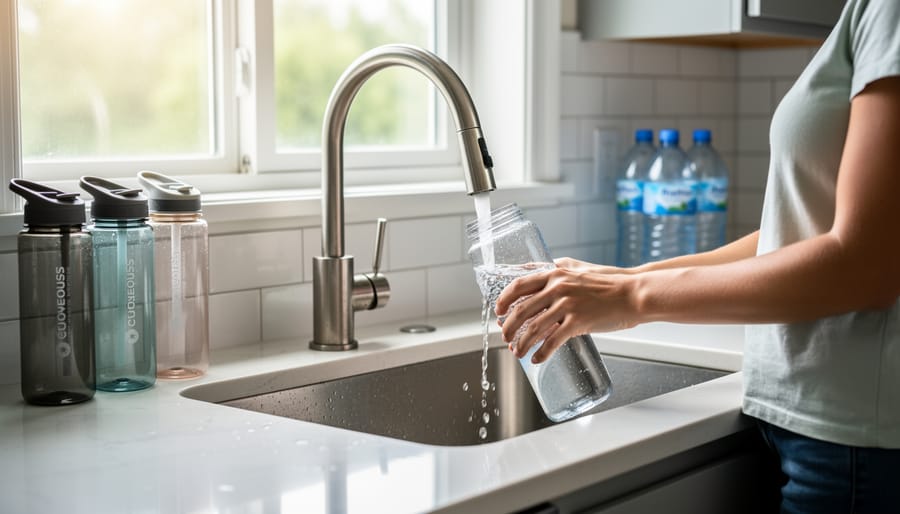
The environmental impact becomes clear within weeks. A family of four drinking filtered tap water instead of bottled water eliminates roughly 2,000 single-use plastic bottles annually. This shift aligns perfectly with Living Water’s sustainability initiatives, including aluminum bottle programs and community refill stations that make clean water accessible while reducing plastic waste. When every tap delivers purified water, the convenience of bottled water loses its appeal.
Your monthly grocery bill reflects the change too. Those cases of bottled water you once hauled home disappear from your shopping list. The cost savings accumulate steadily while you gain the convenience of unlimited filtered water on demand, from any tap in your home.
Choosing the Right System for Your Home’s Unique Needs
Choosing the right point-of-entry system starts with understanding what you’re trying to remove. A certified water test from your municipality or an independent lab reveals the specific contaminants present in your supply. Municipal water quality reports provide baseline data, but home testing identifies localized issues like pipe corrosion or well water variations.
Your household size and daily water usage directly affect the flow rate and capacity you need. A family of four requires different specifications than a couple or a multi-generational household. Systems rated for higher flow rates ensure strong water pressure at every fixture, even when multiple taps run simultaneously.
Here’s how to determine which system features matter most for your situation:
- Identify your primary water quality concern (chlorine taste, microbiological threats, heavy metals, or sediment)
- Calculate your home’s peak water demand by counting fixtures and typical simultaneous use
- Review NSF/ANSI certifications that address your specific contaminants of concern
- Consider your environmental priorities, including reducing plastic waste and minimizing maintenance materials
- Evaluate available installation space and maintenance accessibility
Match your test results to the appropriate technology rather than defaulting to the most comprehensive system. Chlorine-heavy municipal water responds well to activated carbon, while microbiological concerns demand UV treatment. A detailed whole house filter review helps you understand how different models address specific challenges.
Budget considerations extend beyond initial cost. Factor in filter replacement frequency, media lifespan, and energy consumption for UV systems. Water system financing options make comprehensive protection accessible without compromising on certified performance.
The right system balances your water quality needs with practical constraints like space and maintenance capacity, delivering clean water throughout your home without unnecessary complexity.
Installation Considerations and Long-Term Maintenance
Installing a whole house filtration system transforms your home’s water quality, but understanding the process helps you plan effectively. Most point-of-entry systems require installation at your main water line, typically near where municipal water enters your home or after your well pressure tank. You’ll need adequate space, usually a few feet of wall clearance, and access to electrical outlets if your system includes UV microbiological treatment or other powered components.
Professional installation ensures proper integration with your existing plumbing and maintains water pressure throughout your home. A certified technician will size the system correctly for your household’s flow rate demands, preventing bottlenecks that could affect shower pressure or appliance performance. While installation requires an upfront investment, the comprehensive protection and appliance longevity you gain make it worthwhile for long-term home health.
Ongoing maintenance keeps your system performing optimally without demanding extensive effort. Sediment pre-filters typically need replacement every three to six months depending on your water quality, while activated carbon filters last six to twelve months. UV bulbs maintain their microbiological effectiveness for about a year, and most systems include indicator lights or timers to remind you when replacement is due. Multi-stage systems may have different replacement schedules for each stage, creating a staggered maintenance pattern rather than requiring everything at once.
Modern whole house filtration systems include monitoring features that track filter life and water flow, taking the guesswork out of maintenance. Regular filter changes preserve your system’s NSF-certified performance and protect your water quality investment. The maintenance schedule becomes routine once established, and the peace of mind from knowing every tap delivers consistently clean water makes the minimal upkeep effort feel natural.
Clean water flowing from every tap in your home isn’t a luxury, it’s a fundamental need that whole house filtration systems address at the source. By treating water where it enters your property, these point-of-entry systems protect every shower, faucet, and appliance from contaminants that threaten both health and environmental goals.
The systems that deliver real results combine proven technologies like multi-stage filtration, activated carbon, and UV microbiological treatment with third-party certification from organizations like NSF, IAPMO, and WQA. These independent standards ensure your investment delivers measurable protection against health-effect contaminants, not just marketing promises.
Living Water Filtration Systems built its reputation on this commitment to science-backed innovation and transparency. When you choose a certified whole house system in 2026, you’re making a decision that ripples beyond your household, reducing plastic waste, extending appliance lifespans, and creating healthier environments for everyone under your roof.
The path to comprehensive home water protection starts with understanding what’s in your water and matching it to the right purification approach. Whether you’re concerned about microbiological safety, chemical contaminants, or simply want better-tasting water throughout your home, the right system transforms every tap into a source of confidence and wellness.