Yes, distilled water is safe to drink. This highly purified form of water has had nearly all contaminants, minerals, and impurities removed through a boiling and condensation process, making it one of the cleanest drinking water options available. While you may encounter concerns about its lack of minerals, the science is clear: distilled water won’t leach essential nutrients from your body, and the trace minerals in tap water contribute minimally to your daily nutritional needs compared to food sources.
The confusion surrounding distilled water’s safety stems from outdated studies and persistent myths about demineralized water. In reality, millions of people worldwide drink distilled water daily without adverse health effects. The World Health Organization acknowledges that while distilled water lacks minerals, there’s no convincing evidence it causes harm when consumed as part of a balanced diet. Your body obtains the vast majority of calcium, magnesium, and other essential minerals from food, not water.
What makes distilled water particularly appealing for health-conscious consumers in 2026 is its purity. The distillation process effectively removes heavy metals, chlorine, fluoride, bacteria, viruses, and chemical contaminants that may exist in municipal or well water supplies. For those with compromised immune systems, infants preparing formula, or anyone seeking to minimize exposure to waterborne pollutants, distilled water offers peace of mind.
The real question isn’t whether distilled water is safe, but whether it’s the right choice for your specific needs, lifestyle, and environmental values. Understanding the practical trade-offs between purity, taste, mineral content, and sustainability will help you make an informed decision about incorporating distilled water into your daily routine.
What Makes Distilled Water Different from Other Purified Water
Distillation stands apart from other purification methods because it mimics nature’s water cycle. The process heats water to its boiling point, capturing the steam as it rises and leaving behind virtually everything that doesn’t evaporate, contaminants, minerals, chemicals, and microorganisms. As the steam cools and condenses back into liquid, you’re left with water in its purest form, typically achieving 99.9% purity.
- Distillation
- A purification process that boils water, collects the vapor, and condenses it back to liquid, removing contaminants, minerals, and impurities that don’t evaporate.
- Demineralization
- The removal of dissolved minerals from water, resulting in near-zero mineral content measured in parts per million (ppm).
- Total Dissolved Solids (TDS)
- A measurement of all organic and inorganic substances dissolved in water, including minerals, salts, and metals. Distilled water typically measures 0-10 ppm TDS, compared to tap water’s 50-500 ppm range.
- Purification Methods
- Various techniques for removing contaminants from water, including distillation, filtration, reverse osmosis, and UV treatment, each with distinct mechanisms and effectiveness levels.
This differs fundamentally from advanced filtration which pushes water through physical barriers, like activated carbon or ceramic filters, to trap particles and absorb certain chemicals. Filtration excels at removing sediment, chlorine, and some organic compounds, but it leaves most dissolved minerals intact. The result is cleaner water that still contains beneficial minerals along with some substances filters can’t catch.
Reverse osmosis takes a middle ground, forcing water through a semi-permeable membrane that blocks 95-99% of dissolved solids, including minerals. It’s highly effective against heavy metals and salts but requires water pressure and produces wastewater in the process.
Spring water, meanwhile, isn’t purified at all in the technical sense, it’s naturally filtered through rock layers as it flows underground, picking up minerals along the way. While this can create pleasant-tasting water, there’s no guarantee of consistent purity or absence of modern contaminants like agricultural runoff or industrial chemicals.
The Safety Profile: What Science Says About Drinking Distilled Water
Contaminant Removal Benefits
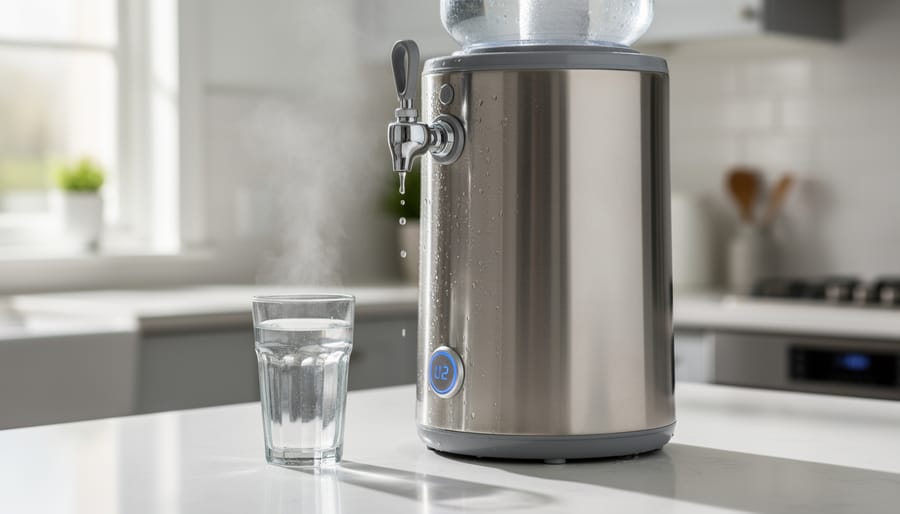
Distillation removes virtually all contaminants because impurities can’t vaporize with pure water molecules. When water boils at 100°C, it leaves behind heavy metals like lead and mercury, dissolved solids including nitrates and arsenic, and organic compounds such as pesticides and industrial solvents. The process eliminates 99.9% of bacteria, viruses, and parasites that survive other treatment methods.
Chlorine and chloramine, common in municipal supplies, evaporate during heating but don’t carry over into the condensed water. Pharmaceutical residues, antibiotics, hormones, antidepressants, concentrate in the boiling chamber rather than transferring to the distilled product. Most significantly, distillation removes emerging contaminants like PFAS (forever chemicals), which resist filtration and can eliminate man-made chemicals that conventional treatment plants miss.
Microplastics, increasingly prevalent in tap and bottled water, cannot pass through the vapor phase. While some systems combine distillation with methods that ozone removes contaminants for comprehensive purification, distillation alone achieves exceptional purity by exploiting the fundamental physical property that water boils at a different temperature than dissolved and suspended impurities.
The Mineral Debate Explained
The concern that distilled water lacks minerals, and might therefore harm your health, is one of the most persistent criticisms you’ll encounter. Here’s what the science actually shows.
Your body obtains the vast majority of essential minerals from food, not water. A balanced diet provides hundreds to thousands of milligrams of calcium, magnesium, and other minerals daily. Meanwhile, typical drinking water contributes only 1-20% of your daily mineral intake, depending on your water source and diet quality.
Research published in the World Health Organization’s guidelines confirms that while some naturally mineral-rich waters do contribute beneficial amounts of certain nutrients, the absence of these minerals in distilled water doesn’t create deficiency risks for people eating varied diets. Your body absorbs minerals far more efficiently from food sources than from water.
The often-cited concern that distilled water “leaches” minerals from your body confuses osmosis with digestion. When you drink any water, your digestive system regulates mineral absorption and retention through complex homeostatic mechanisms, not simple dilution. Studies have found no evidence that drinking distilled water causes mineral depletion in healthy individuals consuming adequate nutrition.
What matters more than the minerals in your water is what contaminants you’re avoiding. For most people, the purity benefits of distilled water outweigh any theoretical mineral contribution, especially when your diet already provides these nutrients in bioavailable forms your body can actually use.
Health Considerations: Who Should and Shouldn’t Drink Distilled Water
For most healthy adults, distilled water is perfectly safe as a primary drinking water source. The human body obtains essential minerals primarily from food, not water, making mineral-free distilled water a viable long-term option for the general population. However, certain groups should evaluate their specific needs before making distilled water their exclusive choice.
| Population Group | Suitability for Distilled Water | Key Considerations |
|---|---|---|
| Healthy Adults | Excellent choice | Obtain minerals from balanced diet; benefit from contaminant-free hydration |
| Athletes & Active Individuals | Good with modifications | May need electrolyte supplementation during intense training or hot conditions |
| People with Mineral Deficiencies | Use with caution | Consult healthcare provider; may require mineral-rich foods or supplements |
| Those on Restricted Diets | Requires monitoring | Ensure adequate mineral intake from permitted foods or physician-approved supplements |
| Immunocompromised Individuals | Highly beneficial | Distilled water eliminates pathogens that filtration systems may miss |
Athletes and people with high physical activity levels can drink distilled water safely, though they should monitor electrolyte balance during prolonged exertion. Adding a pinch of sea salt or using electrolyte supplements compensates for minerals lost through sweat.
Individuals with diagnosed mineral deficiencies, particularly magnesium, calcium, or trace element deficiencies, should consult their healthcare provider. While water contributes minimally to mineral intake even when mineralized, those with absorption issues or severely restricted diets may need to ensure their food sources adequately replace what drinking water might otherwise provide in small amounts. Systems that do more than filter can address multiple water quality concerns simultaneously.
People with compromised immune systems actually benefit significantly from distilled water’s purity. The distillation process eliminates bacteria, viruses, and parasites that pose risks to those undergoing chemotherapy, living with HIV/AIDS, or taking immunosuppressive medications. For these individuals, distilled water offers protection beyond what whole house filtration alone may provide.
Pregnant women and nursing mothers can safely drink distilled water while maintaining a nutrient-rich diet. The key consideration across all groups remains the same: ensure your overall diet provides adequate minerals, and distilled water becomes a clean, safe hydration source.
Environmental and Practical Advantages of Distilled Water Systems
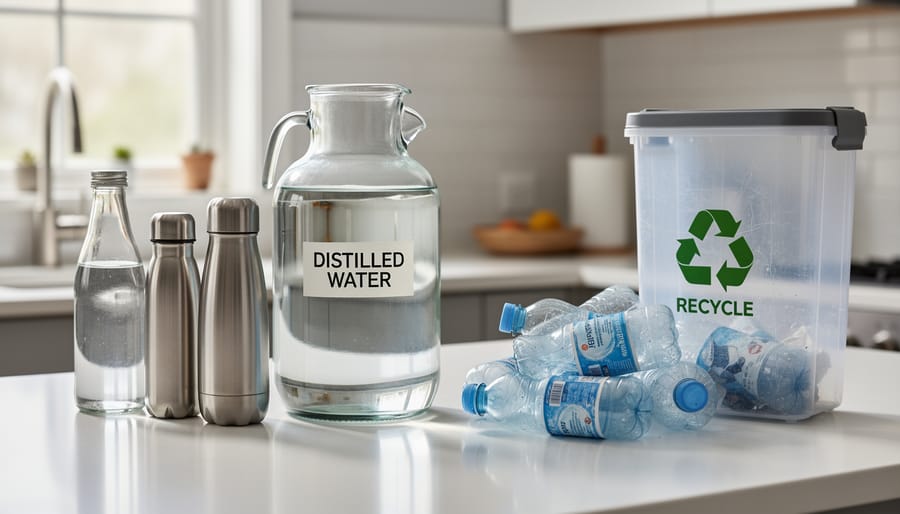
Beyond safety, home distillation systems deliver meaningful environmental benefits that align with sustainable living values. While purifying water for consumption, these systems simultaneously reduce ecological footprint in ways bottled water and chemical treatment never could.
The most immediate impact is eliminating plastic waste. Americans discard approximately 35 billion plastic water bottles annually, with less than 30% reaching recycling facilities. A single home distillation unit can prevent a family of four from generating roughly 1,400 bottles yearly. Over a decade, that’s 14,000 bottles diverted from landfills and oceans, representing a tangible reduction in microplastic pollution.
Distillation also removes dependence on chemical additives. Municipal water treatment relies on chlorine, fluoride, and coagulants that eventually discharge into watersheds. Home systems process tap water without introducing new chemicals, breaking the cycle of treatment byproducts entering ecosystems. For environmentally conscious households, this means cleaner water without perpetuating pharmaceutical residues and disinfection byproducts downstream.
Long-term water security adds another dimension. Climate change and aging infrastructure make local water quality unpredictable. Home distillation systems operate independently of bottled supply chains vulnerable to fuel costs, production disruptions, and transportation emissions. During contamination events or natural disasters, these units continue producing safe water from municipal supplies when bottled alternatives become scarce or environmentally irresponsible to transport.
The energy investment deserves consideration. Modern countertop distillers consume approximately 3 kilowatt-hours per gallon, but this trades favorably against the energy embedded in bottled water production, refrigeration, and distribution. For households already committed to renewable energy sources, distillation becomes remarkably efficient within a broader sustainability framework.
Home distillation represents practical environmental stewardship. It transforms water safety from a consumer product into a household capability, reducing waste while ensuring access to pure water regardless of external supply conditions.
Taste, Usage, and Daily Drinking Tips

Distilled water’s “flat” taste catches many first-time drinkers off guard. That mild, neutral flavor results from the absence of dissolved minerals that give tap or spring water its characteristic taste. Your taste buds notice what’s missing, not what’s there. Some people adapt within days; others prefer enhancement.
To improve palatability, add a squeeze of fresh lemon or lime, the citrus brightens the flavor while providing vitamin C. A pinch of Himalayan pink salt or Celtic sea salt reintroduces trace minerals without compromising purity. Infusing distilled water with cucumber slices, mint leaves, or berries creates naturally flavored hydration that’s refreshing and contaminant-free.
Distilled water excels in applications where mineral buildup causes problems. Use it in coffee makers, tea kettles, and steam irons to prevent scale deposits that shorten appliance life. Your coffee and tea will taste cleaner, the pure water highlights natural flavors without interference from chlorine or hard water minerals. Steam humidifiers and CPAP machines benefit enormously, as distilled water eliminates the white dust residue that forms with tap water.
In cooking, distilled water ensures pasta, rice, and soups don’t absorb unwanted flavors or contaminants. It’s ideal for baby formula preparation when you want absolute control over what your infant consumes.
For daily drinking, start your morning with a glass of room-temperature distilled water, some find it more palatable than ice-cold. Keep a glass pitcher in the refrigerator with citrus slices for grab-and-go hydration. If you’re used to mineral-rich water, transition gradually while maintaining a nutrient-dense diet. Your body will adjust, and you’ll appreciate the clean, pure hydration distilled water provides.
Common Myths and Misconceptions Debunked
Misinformation about distilled water spreads quickly online, often presented as fact without scientific support. Let’s examine the most common myths and what the evidence actually shows.
Myth 1: Distilled water leaches minerals from your body. This persistent claim misunderstands basic physiology. Your body maintains mineral balance through complex regulatory systems controlled by your kidneys, hormones, and digestive tract, not by the mineral content of your drinking water. Water passes through your system; it doesn’t strip calcium from your bones or magnesium from your cells. The minerals you need come predominantly from food. A glass of milk provides more calcium than you’d get from hundreds of gallons of mineral-rich water.
Myth 2: Distilled water is dangerously acidic. Pure distilled water has a neutral pH of 7.0 at the moment of distillation. When exposed to air, it absorbs small amounts of carbon dioxide, which can lower the pH to around 5.8, similar to rainwater. This mild acidity poses no health risk. Your stomach acid has a pH of 1.5 to 3.5, and your body’s buffering systems easily handle the negligible acidity of distilled water. The claim that it causes acidosis has no scientific foundation.
Myth 3: Distilled water lacks oxygen and tastes flat because it’s “dead.” Distilled water contains dissolved oxygen, just like any water exposed to air. The flat taste comes from the absence of dissolved minerals that provide subtle flavors, not from missing oxygen or life force. If taste matters to you, adding a squeeze of lemon or a pinch of mineral salt solves this easily.
Does distilled water pull minerals from your body?
No. Your body regulates mineral balance through your kidneys and digestive system, not through water intake. The minerals you need come from food, not drinking water.
Is distilled water too acidic to drink safely?
No. While distilled water may have a slightly acidic pH (around 5.8) from absorbing atmospheric CO₂, this mild acidity is harmless and far less acidic than many beverages and even your stomach’s natural environment.
Does distilled water expire?
Distilled water itself doesn’t spoil, but it can absorb contaminants from storage containers or air exposure over time. Store it in clean, sealed glass or food-grade plastic containers to maintain purity.
Is distilled water the same as deionized water?
No. Distilled water is purified through boiling and condensation, removing nearly all contaminants. Deionized water uses ion-exchange resins to remove minerals but may not eliminate organic compounds or microorganisms.
These myths often stem from misinterpreted studies or anecdotal claims rather than controlled research. Understanding the science helps you make informed decisions about your water choices based on facts, not fear.
Distilled water is scientifically proven safe for drinking and represents one of the purest water options available. By removing contaminants like heavy metals, chlorine, bacteria, pharmaceuticals, and emerging pollutants such as PFAS, distillation delivers water free from the impurities that compromise both health and taste. For anyone concerned about what’s in their water supply, distillation provides measurable peace of mind.
The concerns you’ve likely encountered about mineral deficiency don’t hold up under scientific scrutiny. Your body obtains the vast majority of essential minerals from food, not water. Unless you’re following an extremely restricted diet, drinking distilled water won’t create nutritional gaps. What it will do is eliminate the contaminants that water treatment plants sometimes miss.
Choosing the right water purification method comes down to your priorities. If maximum purity and contaminant removal top your list, distillation excels. If you value sustainability and want to eliminate bottled water waste while ensuring long-term access to clean drinking water, home distillation systems align perfectly with those goals.
Your water choice matters for your health and the environment. Consider what you need most: Are you addressing specific water quality concerns? Do you want to reduce your environmental footprint? Are you seeking the highest level of purification available?
There’s no one-size-fits-all answer, but understanding the science behind distilled water empowers you to make the choice that serves your household best. Clean water isn’t a luxury, it’s fundamental to wellbeing and sustainable living.