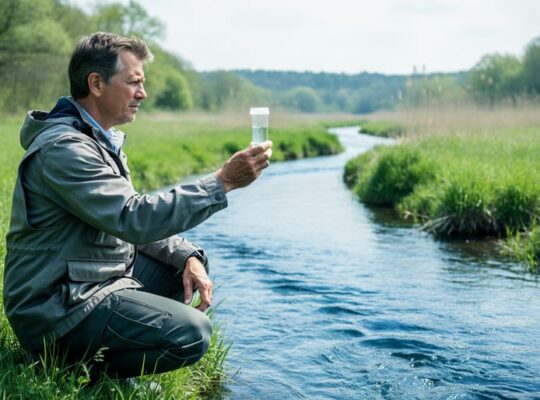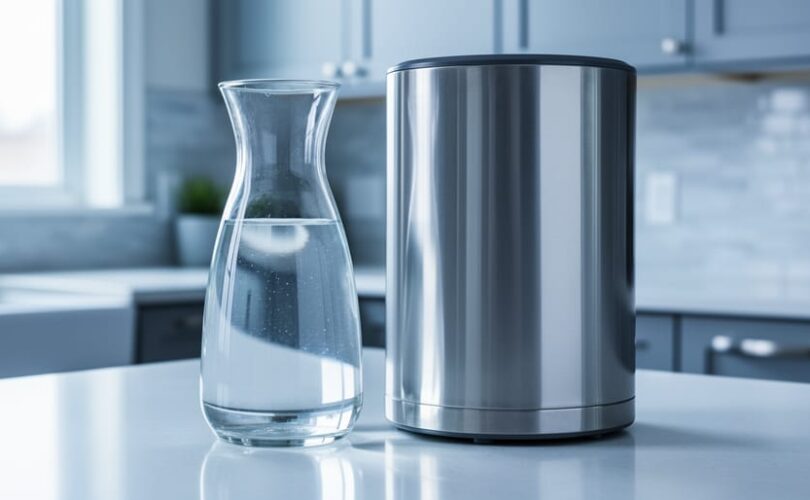
Distilled water is exceptionally effective at removing PFAS (per- and polyfluoroalkyl substances), with properly functioning distillation systems eliminating 99% or more of these persistent contaminants. The boiling and condensation process exploits a fundamental difference in chemistry: PFAS compounds have extremely high boiling points (often exceeding 400°F), while water vaporizes at 212°F. When distillation equipment heats water to steam and recondenses it in a clean chamber, the PFAS molecules remain behind in the boiling tank rather than transferring to your purified water supply.
This science-backed approach makes distillation one of the most reliable home treatment methods for PFAS removal, particularly for people drawing water from contaminated wells or municipal systems with known “forever chemical” issues. The technology works consistently across the entire class of more than 9,000 PFAS variants, unlike activated carbon filters that may miss certain compounds or lose effectiveness over time.
That said, distillation isn’t inherently foolproof. Understanding where contamination can still occur, how different distiller designs perform, and what maintenance practices ensure consistently clean output will help you determine whether is distilled water safe for your household and whether this purification method matches your specific water quality challenges.
What Are PFAS and Why They Matter in Your Water
PFAS, per- and polyfluoroalkyl substances, are a family of more than 12,000 synthetic chemicals engineered to resist heat, water and oil. Industry has used them since the 1940s in everything from nonstick cookware and waterproof fabrics to firefighting foam and food packaging. That versatility comes with a serious downside: the carbon-fluorine bonds that make PFAS so useful also make them nearly indestructible in the environment. Once released, these compounds persist for decades or centuries, earning them the label PFAS as forever chemicals that accumulate in soil, water and living tissue.
The prevalence of PFAS in drinking water has grown impossible to ignore. A 2023 U.S. Geological Survey study detected PFAS in nearly half of U.S. tap water samples, with urban areas and regions near industrial sites or military bases showing the highest concentrations. Contamination pathways include factory discharges, landfill leachate, agricultural runoff from treated biosolids and legacy firefighting foam applications. Because PFAS travel easily through groundwater and don’t break down, they’ve spread far beyond their original points of release.
Health research has linked PFAS exposure to elevated cholesterol, immune system suppression, thyroid disruption, pregnancy complications and increased risk of certain cancers. The compounds bioaccumulate, meaning repeated low-level exposure adds up over time. In response, the EPA finalized the first enforceable drinking water limits for six PFAS compounds in April 2024, requiring public water systems to monitor and reduce contamination. These regulations reflect growing scientific consensus, but many private wells and smaller systems remain unregulated.
For homeowners concerned about exposure, understanding removal options matters. While municipal treatment varies in effectiveness, advanced filtration technologies at the point of use offer reliable control. Distillation stands out as one of the most thorough methods, addressing not just PFAS but a broad spectrum of contaminants in a single process.
How Distillation Removes PFAS: The Science Behind the Process
Why PFAS Don’t Vaporize During Distillation
PFAS compounds stay behind during distillation because of a fundamental mismatch between their chemistry and water’s. While water boils at 100°C (212°F), PFAS molecules have boiling points that range dramatically higher, typically between 150°C and well over 400°C depending on the specific compound. This huge temperature gap is your safety margin.
The reason comes down to molecular structure. PFAS molecules contain chains of carbon atoms completely surrounded by fluorine atoms, creating some of the strongest chemical bonds found in nature. These carbon-fluorine bonds require enormous energy to break, which translates directly into high boiling points. Water molecules, by contrast, are small and relatively simple, held together by much weaker bonds that break apart easily at lower temperatures.
When your distiller heats water to its boiling point, water molecules gain enough energy to escape as vapor and rise into the condensation chamber. PFAS molecules, still locked in their heavy molecular structures, lack the energy needed to vaporize. They remain stubbornly in the liquid phase, concentrating in the boiling chamber along with other non-volatile contaminants.
Think of it like trying to lift weights of vastly different sizes. Water molecules are light enough to “lift off” at 100°C, while PFAS compounds are so heavy they’d need temperatures two, three, or even four times higher to achieve the same escape. By the time your distiller finishes its cycle, the PFAS-laden residue gets discarded, and you’re left with vapor-distilled water that’s chemically separated from these persistent chemicals.
Distillation Effectiveness: What the Research Shows
Scientific studies consistently demonstrate that distillation removes PFAS compounds at exceptionally high rates. Laboratory testing shows removal efficiency typically exceeding 99.9% for most PFAS varieties, including both long-chain and short-chain compounds. This performance stems from the fundamental boiling point differential: water vaporizes at 100°C (212°F), while PFAS compounds have boiling points ranging from 150°C to over 400°C, meaning they remain in the boiling chamber as non-volatile residue.
Research published between 2024 and 2026 has reinforced distillation’s effectiveness across diverse water conditions. Independent testing by environmental laboratories has verified these removal rates in real-world applications, not just controlled settings. The process works equally well against PFOA, PFOS, and newer replacement chemicals like GenX compounds that utilities have increasingly detected in municipal systems.
| Contaminant Type | Boiling Point | Distillation Removal Rate |
|---|---|---|
| PFAS Compounds | 150-400°C+ | 99.9%+ |
| Bacteria and Viruses | Destroyed at 100°C | 100% |
| Dissolved Salts | 800-1,400°C | 99.8%+ |
What makes these findings particularly valuable is their consistency across different water sources and PFAS concentrations. Whether your source water contains 10 parts per trillion or 100 parts per trillion of PFAS, distillation reduces levels to below detection limits in properly maintained systems. The key is ensuring your equipment operates correctly and that post-distillation handling prevents recontamination.
When Distilled Water Can Contain PFAS: Understanding the Risk Factors
Source Water Quality Matters
While distillation removes over 99% of PFAS under normal conditions, the quality of your source water still plays a role in maintaining system effectiveness. Extremely high PFAS concentrations, typically found near industrial sites or contaminated groundwater sources, can accelerate residue buildup in your distillation chamber.
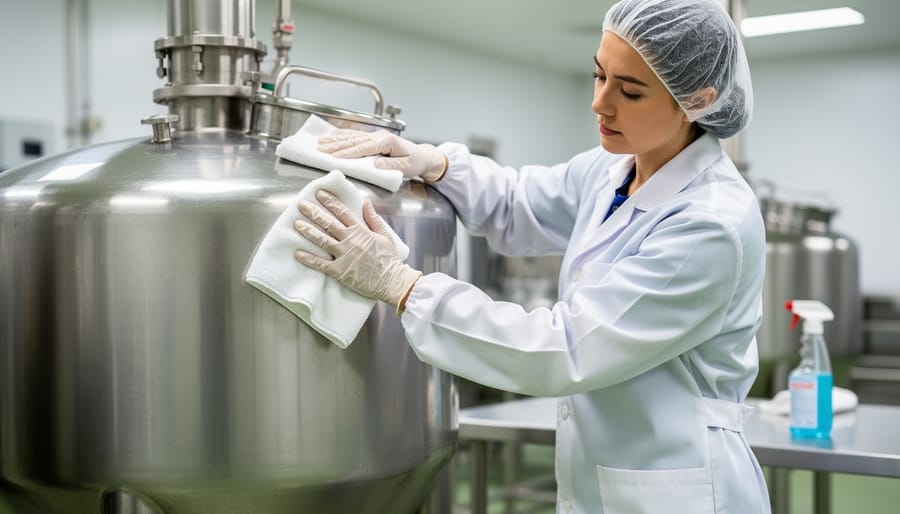
Here’s what happens: PFAS and other contaminants concentrate in the boiling chamber as water evaporates. With heavily contaminated source water, this residue accumulates faster, creating a thicker layer that requires more frequent cleaning. If left unchecked, excessive buildup can reduce efficiency and, in rare cases, allow trace amounts of contaminants to carry over into your distilled water.
Regular cleaning prevents this issue entirely. Most home distillers need cleaning every 15-30 uses with typical municipal water, but high-contamination areas may require weekly attention. The process takes minutes: rinse the chamber, wipe away mineral deposits and residue, then run a citric acid cycle if needed.
Think of it like maintaining any precision tool. The distillation process itself remains highly effective, but contaminated residue won’t remove itself. Consistent cleaning ensures your system continues delivering pure, PFAS-free water regardless of what’s in your tap.
Storage and Container Considerations
After distillation removes PFAS from your water, the container you choose for storage becomes critical. Certain plastics contain PFAS compounds used as processing aids or coatings, and these chemicals can migrate into your purified water over time. Studies from 2025 show that some food-grade plastics leach measurable PFAS levels, especially when exposed to heat or stored long-term.
The safest storage options use materials with documented PFAS-free certifications. High-quality stainless steel and specifically treated aluminum containers prevent chemical leaching while maintaining water purity. When reviewing product specifications, check the material safety data to confirm containers meet current PFAS-free standards.
Glass remains an excellent choice for stationary storage, though it lacks portability. For everyday use, look for containers explicitly labeled as PFAS-free and made from single-layer metals rather than plastic composites. Living Water’s commitment to sustainable materials extends to recommending storage solutions that protect both your health and the environment, eliminating the contamination risk that undermines your distillation efforts.
How to Ensure Your Distilled Water Is PFAS-Free
Choosing a Quality Distillation System
Selecting a distillation system requires evaluating several critical factors that directly impact PFAS removal effectiveness and long-term safety.
Start with certifications. Look for NSF/ANSI Standard 62 certification, which verifies distillers meet strict material safety and performance requirements. Systems tested to NSF 53 or NSF 58 protocols for contaminant reduction provide additional assurance, though distillation isn’t specifically rated under these standards. Third-party verification matters more than manufacturer claims alone.
Material quality determines whether your system introduces contaminants instead of removing them. Stainless steel boiling chambers and condensation coils eliminate the risk of PFAS leaching from plastic components during high-heat operation. Glass or stainless collection containers maintain purity after distillation. Avoid systems with plastic parts contacting heated water or condensed vapor.
Capacity should match your household needs without encouraging shortcuts. A system producing 1-4 gallons daily suits most families, while larger units serve businesses or high-consumption households. Undercapacity leads to skipped maintenance or using untreated water.
Maintenance requirements affect long-term performance. Simple designs with removable, dishwasher-safe components encourage regular cleaning that prevents PFAS buildup in residue. Systems requiring specialized tools or complex disassembly often get neglected.
Living Water’s distillation systems integrate these principles with stainless steel construction, automated cleaning cycles, and transparent third-party testing. The science-backed design removes 99.9% of PFAS while minimizing energy consumption, combining health protection with environmental responsibility.
Testing Your Water for PFAS
Testing your water makes sense if you’re using distilled water for infant formula, have immunocompromised family members, or live in an area with known PFAS contamination. Most home users who maintain their distillation equipment properly don’t need frequent testing, but verification provides peace of mind.
For reliable results, use EPA-certified laboratories that test for the full range of PFAS compounds, not just PFOA and PFOS. Request Method 537.1 or the newer draft Method 1633, which detects 40+ PFAS variants. Expect to pay $200-400 for comprehensive testing, though some state health departments offer free or subsidized testing for residents in affected areas. Collect samples in lab-provided containers, never reuse bottles, as PFAS contamination from previous contents can skew results.
When you receive results, anything below 4 parts per trillion (ppt) for PFOA and PFOS combined meets current EPA health advisory levels as of 2026, though stricter standards continue to evolve. If your distilled water shows detectable PFAS, examine your storage containers first, they’re the most common culprit, then inspect your distiller’s condensation coil and collection vessel for residue buildup that needs cleaning.
Your Rights and What to Expect from Water Purification Providers
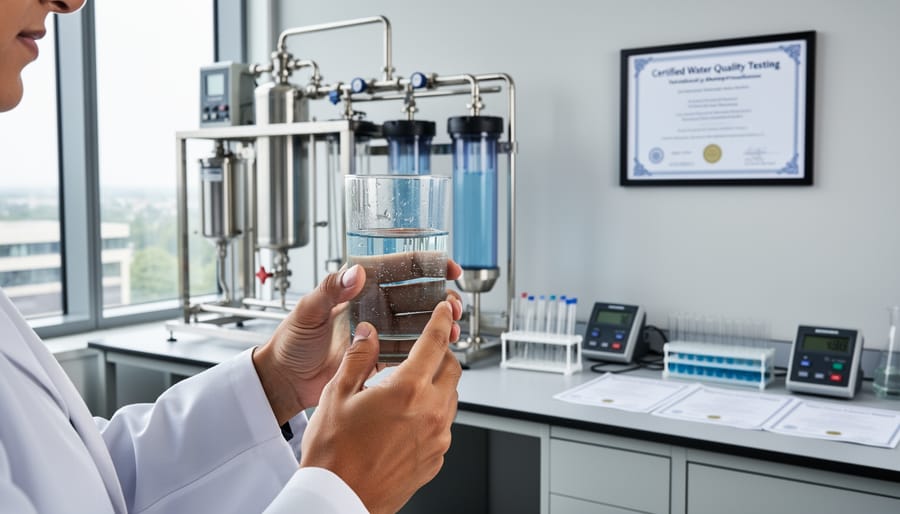
When you invest in a distillation system for PFAS removal, you deserve transparency and accountability from your provider. Reputable manufacturers should openly disclose the materials used in their equipment, confirming that tanks, tubing, and seals are free from PFAS-containing compounds that could contaminate your purified water. You have the right to clear performance data showing removal rates for specific contaminants, not vague marketing claims about purity.
Quality providers recognize that effective water purification systems need to more than just filter water. They should equip you with comprehensive information about maintenance schedules, cleaning protocols, and replacement part specifications. As a consumer, expect these commitments from responsible distillation system providers:
- Complete disclosure of all materials in contact with water, with certification that components are PFAS-free
- Published third-party testing results demonstrating PFAS removal effectiveness
- Clear maintenance instructions and schedules to prevent contamination buildup
- Established protocols for addressing potential contamination issues and customer concerns
- Access to testing resources or partnerships with certified laboratories for water quality verification
Living Water and other conscientious providers stand behind their products with verifiable data and ongoing support. You should receive detailed documentation about your system’s capabilities, limitations, and proper use. If a manufacturer makes PFAS removal claims without providing supporting evidence or material safety information, that raises legitimate concerns about their commitment to your health and safety. The best providers view themselves as partners in your water quality journey, offering education and resources that extend beyond the initial purchase. This transparency builds trust and ensures you can confidently rely on your distillation system to deliver the PFAS-free water you expect.
Distilled Water vs. Other Filtration Methods for PFAS Removal
Distillation stands out for removing PFAS, but it isn’t the only option. Understanding how different methods stack up helps you choose the right approach for your water quality needs and household setup.
Reverse osmosis (RO) systems also excel at PFAS removal, typically achieving 90-99% reduction depending on membrane quality and PFAS chain length. Short-chain PFAS compounds sometimes slip through RO membranes more easily than long-chain varieties, though high-quality systems minimize this gap. RO produces wastewater, usually three to four gallons for every gallon purified, which distillation avoids by converting water to vapor rather than forcing it through a membrane.
Activated carbon filters vary widely in PFAS effectiveness. Standard granular activated carbon (GAC) removes some PFAS but saturates quickly, especially with short-chain compounds. Newer carbon block filters engineered specifically for PFAS perform better, capturing 70-90% when fresh, but they require frequent replacement as the carbon binding sites fill up. You won’t know when capacity is exhausted without testing, which makes maintenance timing uncertain.
Ion exchange resins target PFAS by attracting the charged molecules, showing strong removal rates, often above 95%, for many PFAS types. However, these systems work best for whole house filtration rather than point-of-use applications, and the resin eventually requires regeneration or replacement, creating waste containing concentrated PFAS.
| Method | PFAS Removal | Other Contaminants | Maintenance |
|---|---|---|---|
| Distillation | 99%+ (all chain lengths) | Bacteria, heavy metals, VOCs, minerals | Periodic cleaning; no filter changes |
| Reverse Osmosis | 90-99% (variable by chain) | Most dissolved solids, some VOCs | Membrane replacement yearly; produces wastewater |
| Activated Carbon | 70-90% when fresh | Chlorine, some pesticides, taste/odor | Frequent filter replacement; uncertain saturation timing |
| Ion Exchange | 95%+ for targeted PFAS | Heavy metals, nitrates (depends on resin) | Resin regeneration or replacement; concentrated waste |
Distillation’s key advantage lies in its comprehensive approach: it removes virtually all contaminant types, PFAS, microplastics, heavy metals, pathogens, dissolved solids, through one physical process. You don’t need to combine multiple filter stages or worry whether your carbon is still capturing short-chain PFAS. The equipment lasts for years with simple cleaning, and there are no cartridges heading to landfills every few months. For households concerned about multiple water quality issues beyond PFAS alone, distillation delivers broad-spectrum protection that single-purpose filters can’t match.
Frequently Asked Questions About PFAS and Distilled Water
Can any PFAS survive the distillation process?
No, PFAS cannot survive properly functioning distillation because their boiling points (typically above 300°F) are far higher than water’s 212°F. The chemicals remain in the boiling chamber while pure water vapor rises and condenses, achieving removal rates exceeding 99% when equipment operates correctly.
Is bottled distilled water guaranteed to be PFAS-free?
Not always. While the distillation process removes PFAS effectively, contamination can occur through plastic bottle leaching or compromised storage conditions. Look for brands that provide third-party testing results and use PFAS-free packaging materials like glass or aluminum.
How often should I clean my home distillation system?
Clean your distiller after every 10-15 uses or when you notice mineral buildup in the boiling chamber. Regular cleaning prevents PFAS and other contaminants from accumulating in residue that could cross-contaminate future batches, and it maintains the system’s efficiency.
Do I need additional filters if I’m using distillation for PFAS removal?
Distillation alone removes PFAS without requiring supplementary filtration. However, some users add carbon post-filters to improve taste by removing any volatile organic compounds that might vaporize with water, though this doesn’t affect PFAS removal.
What’s the environmental impact of home distillation compared to buying bottled water?
Home distillation eliminates plastic waste from bottled water purchases and reduces transportation emissions. While distillers use electricity, the energy cost per gallon is typically lower than the environmental footprint of manufacturing, transporting, and disposing of single-use plastic bottles.
Should I test my distilled water for PFAS contamination?
Testing makes sense if your source water has extremely high PFAS levels or you want verification of your system’s performance. Third-party lab testing costs between $200-400 but provides definitive answers about contamination levels in your finished water.
These questions reflect the most common concerns people have when evaluating distillation as a PFAS removal solution. The answers emphasize that while distillation is highly effective, maintaining equipment properly and choosing quality storage materials are essential steps you control.
If you’re using a home distillation system, keep a simple maintenance log noting cleaning dates and any changes in water taste or appearance. This practice helps you stay ahead of potential contamination issues and ensures your distilled water remains as pure as the science promises it can be.
Distillation stands as one of the most reliable methods for removing PFAS from your water when you maintain your equipment properly and store the purified water in safe containers. The science is clear: these forever chemicals stay behind in the boiling chamber while clean water vapor rises and condenses, giving you removal rates that typically exceed 99%.
You don’t have to feel helpless about PFAS contamination. By choosing quality distillation systems, committing to regular maintenance, and using PFAS-free storage materials, you take direct control of your water safety. The investment in proper equipment pays dividends in peace of mind and long-term health protection for your family.
The water purification industry continues to evolve, with companies like Living Water leading advances in sustainable, science-backed filtration technology. Innovation in materials, energy efficiency, and comprehensive contaminant removal means today’s solutions are more effective and environmentally responsible than ever before.
Testing your water gives you baseline knowledge. Maintaining your distiller ensures consistent performance. Making informed choices about storage protects the purity you’ve worked to achieve. These simple practices transform concern into confidence.
Clean water shouldn’t be a luxury or a gamble. With the right approach to distillation, you’re not just removing PFAS, you’re creating a sustainable solution that serves your health, your budget, and the planet. The tools exist. The science works. Now it’s simply a matter of putting knowledge into action.