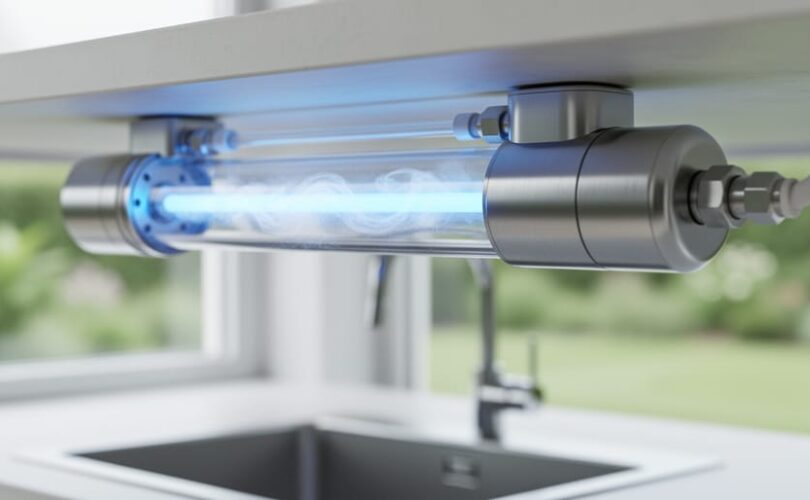
Chemical V is an advanced oxidation process that uses ultraviolet light and hydrogen peroxide to break down synthetic chemicals, pharmaceuticals, and other stubborn contaminants that conventional filtration systems miss. Unlike carbon filters or reverse osmosis, which trap or strain particles, Chemical V actually destroys contaminant molecules at the chemical level, converting them into harmless byproducts like water and carbon dioxide.
For homeowners concerned about PFAS (forever chemicals), pesticide runoff, or pharmaceutical residues in their drinking water, this distinction matters. Standard filters can reduce some contaminants but often leave trace levels of synthetic compounds that persist through conventional treatment. Chemical V targets precisely these stubborn molecules, making it particularly valuable in areas with agricultural contamination, industrial discharge, or outdated municipal treatment infrastructure.
This article explains how Chemical V technology works at the molecular level, the different systems available for residential and commercial applications, and when this treatment method makes sense as part of your water purification strategy. You’ll discover why combining ultraviolet energy with hydrogen peroxide creates a uniquely powerful oxidation reaction, what types of contaminants respond best to this approach, and how to evaluate whether your water quality concerns align with what Chemical V does best.
The science behind Chemical V represents a significant leap forward in home water treatment, offering a sustainable solution that doesn’t generate filter waste or require membrane replacements. Understanding this technology empowers you to make informed decisions about protecting your household from emerging contaminants that older filtration methods weren’t designed to handle.
What Chemical V Means in Water Purification

Chemical V represents a class of catalytic oxidation processes engineered to tackle water contaminants that slip through conventional treatment barriers. Unlike advanced filtration that physically blocks particles or absorbs certain dissolved substances, Chemical V actively breaks down molecular structures of stubborn synthetic pollutants, transforming them into harmless compounds rather than merely trapping them.
This distinction matters because modern water supplies contain man-made chemicals that resist traditional purification. PFAS (per- and polyfluoroalkyl substances), pharmaceutical residues, agricultural pesticides, and industrial solvents share a common trait: they’re molecularly stable, designed to persist and perform specific functions. That stability makes them exceedingly difficult to remove through standard carbon filtration or mechanical screening alone.
- Oxidation
- A chemical reaction that breaks molecular bonds by transferring electrons, effectively dismantling complex pollutants into simpler, less harmful substances.
- Catalytic Reaction
- A process where a catalyst material accelerates chemical breakdown without being consumed itself, enabling continuous water treatment over extended periods.
- Synthetic Pollutants
- Man-made chemical compounds, including pharmaceuticals, pesticides, and industrial chemicals, that don’t exist naturally and often resist biological or conventional filtration removal.
- Advanced Oxidation Processes (AOPs)
- Treatment technologies that generate highly reactive molecules (typically hydroxyl radicals) to chemically decompose persistent contaminants that conventional methods can’t address.
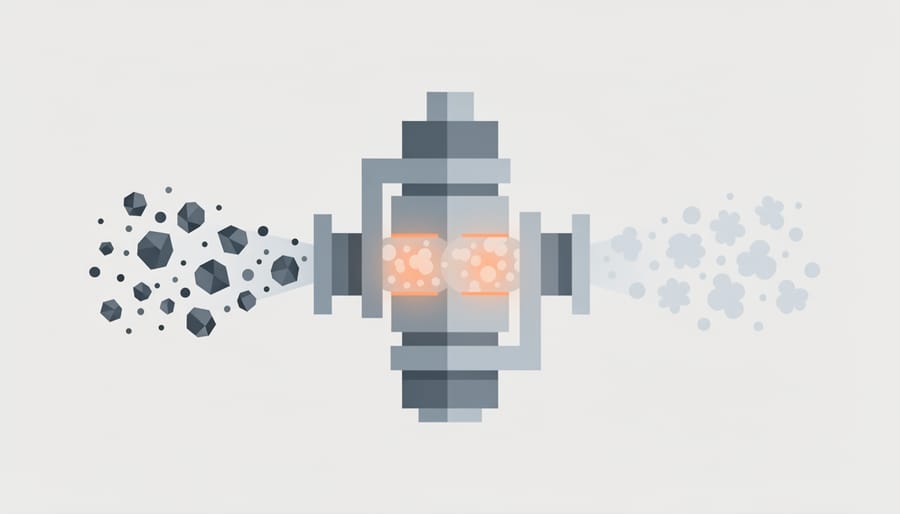
Chemical V systems employ catalysts, materials like titanium dioxide or other specialized compounds, to generate powerful oxidizing agents when activated by energy sources such as UV light or electricity. These oxidizers attack the chemical bonds holding pollutants together, cleaving complex molecules into carbon dioxide, water, and mineral salts. The process essentially reverses the synthesis that created these chemicals in the first place.
Why pursue this aggressive approach? Because many synthetic contaminants share a frustrating characteristic: they’re too small, too chemically inert, or too similar to naturally occurring compounds for conventional systems to identify and capture. Pharmaceuticals pass through activated carbon. PFAS molecules, with their notoriously strong carbon-fluorine bonds, shrug off most biological treatment. Pesticide residues persist at trace levels that mechanical filters miss entirely.
Advanced oxidation fills that gap. It doesn’t rely on physically catching molecules or hoping they’ll stick to a media surface. Instead, it chemically neutralizes them, ensuring they cannot survive treatment or re-contaminate downstream ecosystems. For water systems facing twenty-first-century pollution challenges, Chemical V technology represents the ability to do more than filter it actively eliminates what conventional approaches leave behind.
How Chemical V Works to Break Down Contaminants
The Role of Catalysts in Water Treatment
Think of a catalyst as a chemical matchmaker, it brings reactants together and speeds up their interaction without getting consumed in the process. In Chemical V systems, catalysts create the conditions for powerful oxidation reactions while remaining available to repeat the cycle thousands of times. This endurance makes catalytic treatment economically viable for long-term water purification.
Titanium dioxide stands as the workhorse catalyst in most Chemical V applications. When activated by UV light, this white mineral powder generates hydroxyl radicals, the oxidizing agents that tear apart chemical bonds in pollutants. Other photocatalysts include zinc oxide, tungsten oxide, and engineered composite materials designed to respond to visible light rather than requiring UV wavelengths. Each catalyst offers different activation thresholds, reaction speeds, and durability profiles.
What makes catalysts remarkable in advanced oxidation processes is their permanence. Unlike chlorine or ozone that get used up during treatment, a titanium dioxide particle emerges from each reaction unchanged and ready to facilitate the next. The catalyst provides a surface where water molecules split into reactive fragments, but it doesn’t participate in forming the final breakdown products. Over months or years, mechanical wear or fouling from minerals may reduce surface area, but the catalyst material itself doesn’t degrade chemically.
This durability translates to lower operating costs once a system is installed. You’re not constantly replacing active ingredients, just maintaining the catalyst surface and ensuring proper energy input for activation.
Energy Requirements and Activation
Chemical V systems require specific energy inputs to trigger the catalytic reactions that break down contaminants. The activation method determines both treatment effectiveness and operational sustainability. Most residential and commercial units rely on UV light to energize the catalyst surface, creating the hydroxyl radicals that attack pollutant molecules. UV-activated systems draw between 40 and 150 watts depending on flow rate and catalyst design, roughly the same energy as a standard light bulb running continuously.
Electrochemical oxidations offer an alternative activation approach, using electrical current to generate oxidizing species at electrode surfaces. These systems typically consume 0.5 to 2 kilowatt-hours per thousand gallons treated, making them competitive with UV approaches for larger-scale applications. The choice between UV and electrochemical activation often comes down to water chemistry: high turbidity or color can reduce UV effectiveness, while electrochemical methods handle cloudier water more reliably.
Energy efficiency matters because Chemical V systems run whenever water flows through them. A whole-home unit treating 100 gallons daily might add $5 to $15 to monthly electricity costs with UV activation. Flow-through designs that activate only during use reduce energy waste compared to continuous-operation systems. The sustainability equation balances this energy input against the environmental cost of releasing untreated pharmaceuticals and industrial compounds into waterways, a trade-off that generally favors active treatment for stubborn contaminants that resist passive filtration.
Different Forms of Chemical V Technology
Chemical V technology comes in several distinct forms, each engineered for specific treatment challenges and operating environments. Understanding these variations helps match the right system to your water quality needs.
UV-Activated Photocatalytic Systems represent the most common residential application. These units combine ultraviolet light with titanium dioxide or similar photocatalysts to generate hydroxyl radicals. When UV radiation strikes the catalyst surface, it energizes electrons that react with water molecules to create the oxidizing agents. This approach works continuously in flow-through designs, treating water as it passes through the catalyst chamber. UV-activated systems excel at breaking down pharmaceuticals and pesticides in municipal water supplies, though they require regular lamp replacement and perform best with pre-filtered water that won’t block UV transmission.
Electrochemical oxidation units take a different approach, using electrical current passing through specialized electrodes to generate oxidizing species directly in the water. These systems don’t rely on UV light, making them suitable for turbid water or industrial applications where optical clarity isn’t guaranteed. The electrode materials, often boron-doped diamond or mixed metal oxides, determine treatment efficiency and lifespan. Electrochemical systems handle higher contaminant loads than UV methods and integrate well with ozone treatment in commercial settings, though they consume more electricity and require periodic electrode maintenance.
Hybrid filtration-oxidation platforms combine Chemical V technology with conventional filters in a single system. These integrated units typically use activated carbon or reverse osmosis as pre-treatment stages, removing particles and dissolved organics that might interfere with oxidation, then apply Chemical V to eliminate resistant synthetic chemicals that pass through mechanical filtration. This layered approach addresses the widest contaminant spectrum but requires more space and investment than single-technology systems.
The choice between flow-through and batch treatment depends on volume and contamination severity. Flow-through designs treat water continuously as you use it, ideal for whole-home or point-of-use applications with moderate contamination. Batch systems process water in holding tanks, allowing longer contact time for heavily polluted sources or when targeting particularly stubborn compounds. Industrial and agricultural operations often favor batch processing for wastewater remediation, while residential users benefit from the convenience of continuous flow-through purification.
Where Chemical V Is Used Today
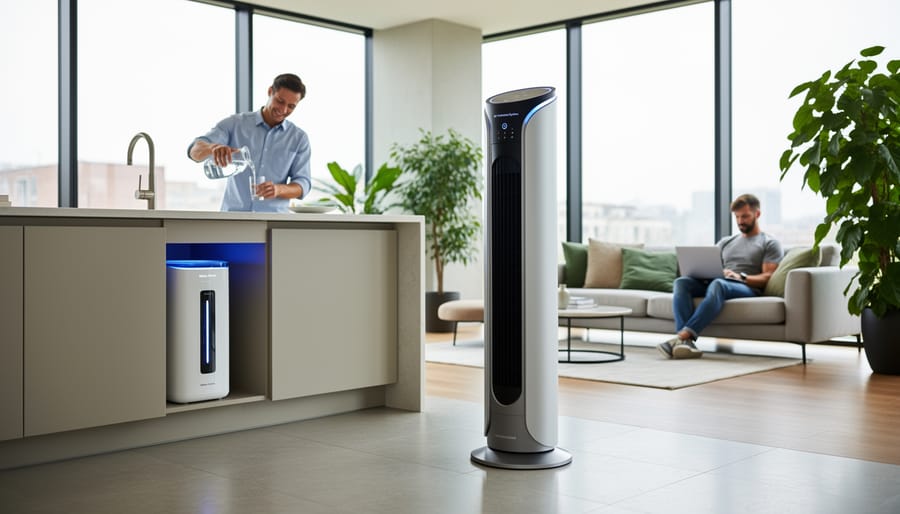
Chemical V technology has moved from research laboratories into real-world water treatment across multiple scales and sectors. The applications range from protecting individual households to safeguarding entire communities from chemical contamination.
In residential settings, Chemical V appears most often in advanced whole house filtration configurations designed for homes facing specific chemical challenges. Families drawing water from private wells near agricultural areas use these systems to break down persistent pesticide residues and herbicides that slip through conventional carbon filters. Homeowners concerned about pharmaceutical compounds in municipal supplies, remnants of medications that survive standard treatment plants, install Chemical V units as a final barrier before water reaches their taps.
Commercial and institutional facilities deploy Chemical V where water purity directly affects operations or public health:
- Food processing plants eliminating chemical residues that could compromise product safety or taste
- Hospitals treating pharmaceutical-laden wastewater before discharge to prevent antibiotic resistance in local ecosystems
- Manufacturing facilities breaking down industrial solvents and cleaning agents in process water
- Community water systems addressing PFAS contamination and other emerging pollutants
- Homes with well water in regions affected by agricultural runoff or industrial legacy contamination
Municipal water treatment facilities increasingly integrate Chemical V as a polishing step for particularly stubborn contaminants. Mid-sized cities dealing with upstream pharmaceutical manufacturing or intensive agriculture have installed these systems to address chemicals that their existing infrastructure cannot handle. The technology proves especially valuable in watersheds where conventional treatment alone fails to meet safety standards for compounds like PFAS or certain pesticide metabolites.
Industrial wastewater applications represent perhaps the most intensive use case. Chemical manufacturers and textile plants use Chemical V to break down complex synthetic compounds before releasing treated water back into rivers or municipal sewer systems, preventing toxic accumulation downstream.
Benefits and Limitations of Chemical V Systems
Chemical V systems excel at destroying persistent synthetic pollutants that slip past conventional filters, pharmaceuticals, PFAS compounds, pesticides, and industrial chemicals that resist mechanical separation. This oxidation technology breaks molecular bonds rather than just trapping contaminants, so there’s no filter media to dispose of and no concentrated waste stream. Unlike methods that require continual addition of chlorine or ozone, Chemical V catalysts remain active through thousands of treatment cycles, reducing ongoing chemical costs and environmental impact.
The environmental advantages extend beyond your tap. By mineralizing organic pollutants into carbon dioxide and water, Chemical V prevents these compounds from accumulating in landfills or re-entering waterways through filter disposal. For households and businesses concerned about pharmaceutical runoff or agricultural chemicals, this technology addresses contaminants at concentrations measured in parts per billion, a sensitivity level that basic carbon filtration simply cannot match.
Cost represents the primary practical consideration. Residential Chemical V units typically start around $2,000 to $4,000 installed, with commercial systems scaling considerably higher depending on flow rates and treatment intensity. The technology requires electrical power for UV activation or electrochemical processes, adding to operational expenses compared to passive filtration. Catalyst replacement, while infrequent, can run several hundred dollars when eventually needed.
Pre-treatment matters significantly for system longevity and performance. Chemical V works most efficiently on water that’s already been cleared of sediment, rust, and organic matter through preliminary filtration stages. Hard water minerals can foul catalyst surfaces over time, potentially requiring water softening upstream. The oxidation process itself doesn’t remove minerals, heavy metals, or microbial contamination, you’ll need complementary technologies like reverse osmosis or UV disinfection for comprehensive protection.
Not every contaminant responds equally to advanced oxidation. While Chemical V destroys complex organic molecules effectively, treatment times vary based on molecular structure, concentration, and water chemistry. Some industrial solvents break down in seconds; others require extended contact time. Testing your specific water and matching the system’s design to your actual contamination profile prevents disappointment and ensures you’re investing in technology that addresses your documented needs.
Chemical V and Environmental Protection

Chemical V technology delivers environmental benefits that extend far beyond individual households or facilities. When deployed at municipal or industrial wastewater treatment plants, these systems actively prevent pharmaceutical residues, pesticide metabolites, and industrial chemicals from re-entering rivers, lakes, and groundwater. Traditional treatment plants often discharge treated water that still contains trace amounts of hormone-disrupting compounds, antibiotics, and synthetic chemicals, substances that accumulate in aquatic ecosystems and eventually work their way up the food chain. Chemical V breaks these persistent pollutants into harmless components before discharge, protecting downstream ecosystems from contamination.
This protective effect matters particularly for pharmaceutical compounds. Birth control hormones, antidepressants, and painkillers routinely pass through conventional wastewater treatment unchanged, affecting fish reproduction and aquatic organism behavior. Chemical V oxidation converts these bioactive molecules into inert substances, severing the pollution cycle at its source.
Industrial applications demonstrate similar environmental gains. Manufacturing facilities using Chemical V for process water treatment can recirculate purified water in closed-loop systems, reducing both freshwater withdrawal and wastewater discharge. A textile plant might treat dye-laden water with Chemical V, then reuse that water for subsequent production cycles, cutting water consumption while eliminating the stream pollution that once characterized the industry.
This alignment with clean water sustainability goals positions Chemical V as infrastructure for genuine environmental protection rather than merely addressing symptoms at the tap. Breaking down persistent organic pollutants before they reach natural waterways prevents the bioaccumulation that threatens ecosystems and ultimately returns contaminants to human water supplies.
Common Questions About Chemical V
Homeowners and water quality professionals often have practical questions before investing in Chemical V technology. Understanding safety, performance expectations, and integration with existing systems helps you make informed decisions about whether this advanced oxidation approach fits your specific needs.
Are the byproducts of Chemical V oxidation safe?
Yes. The oxidation process breaks down synthetic pollutants into simple compounds like carbon dioxide, water, and mineral salts, the same substances that occur naturally in water. Systems are designed so that byproducts pose no health risks when treatment is properly maintained.
How long does Chemical V treatment take to purify water?
Contact time varies by system design and contaminant concentration, typically ranging from seconds in flow-through residential units to several minutes in batch treatment systems. Most whole-home Chemical V filters work continuously at normal household flow rates without noticeable delay.
Does Chemical V remove all chemicals from water?
Chemical V excels at breaking down organic compounds, pharmaceuticals, pesticides, PFAS, and similar man-made chemicals. It’s less effective on inorganic contaminants like heavy metals or dissolved minerals, which is why comprehensive systems combine it with other filtration stages.
How does Chemical V cost compare to traditional carbon filters?
Initial investment runs higher due to catalyst materials and UV or electrical components, but Chemical V systems often have lower long-term costs because catalysts don’t need frequent replacement like carbon media. The total cost depends on your water quality challenges and volume needs.
Determining if you need Chemical V starts with testing your water for emerging contaminants that standard filtration misses. If lab results show pharmaceuticals, agricultural runoff, or persistent organic pollutants, advanced oxidation becomes worth considering. Homes drawing from wells in agricultural areas, properties near industrial sites, or anyone concerned about pharmaceutical residues in municipal water supplies see the clearest benefits. Chemical V works alongside, not instead of, sediment filters and carbon stages, it handles the stubborn synthetic compounds those methods can’t touch.
Chemical V represents a meaningful leap forward in our ability to protect water from the persistent synthetic chemicals that increasingly threaten both human health and environmental integrity. Where conventional filtration reaches its limits, advanced oxidation steps in, breaking molecular bonds that other methods simply cannot touch. This isn’t about replacing the fundamentals of good water treatment; it’s about addressing a reality that science has only recently begun to fully grasp: man-made pollutants like PFAS, pharmaceutical residues, and industrial compounds require solutions as sophisticated as the chemistry that created them.
The technology is here, proven, and increasingly accessible across residential, commercial, and municipal applications. Whether Chemical V belongs in your water strategy depends on what’s actually flowing through your taps. Start with testing, understand your specific contaminant profile, and evaluate treatment options with both effectiveness and sustainability in mind. Clean water isn’t a luxury, it’s a necessity we can now pursue with science-backed confidence and genuine environmental responsibility.