
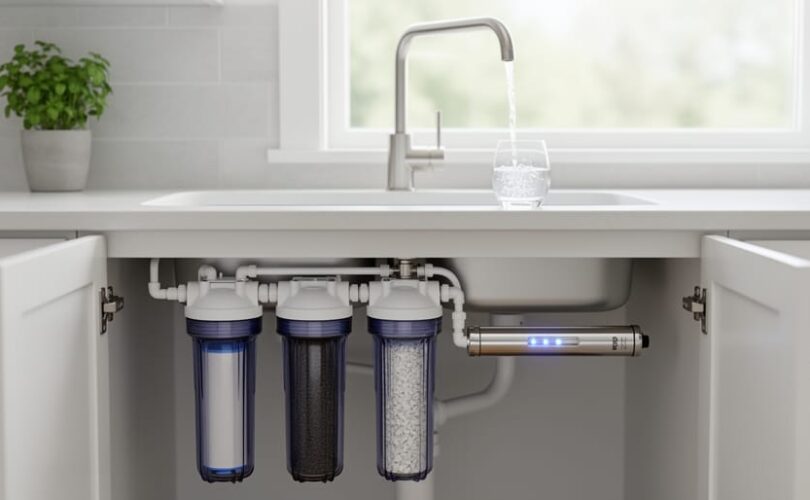
Understand the multi-barrier approach that defines advanced filtration systems: these technologies combine mechanical filtration, activated carbon absorption, ion exchange, and UV sterilization to remove up to 99.9% of contaminants that single-stage filters miss. Unlike basic pitcher filters that only address taste and odor, advanced systems target heavy metals, pharmaceutical residues, microplastics, and pathogenic microorganisms through sequential purification stages.
Evaluate your water quality first by obtaining a comprehensive water test that identifies specific contaminants in your supply. Municipal water reports reveal common issues like chlorine byproducts and aging infrastructure concerns, while well water typically requires testing for bacteria, nitrates, and mineral content. This data-driven approach ensures you select a system calibrated to your actual needs rather than generic solutions.
Compare reverse osmosis, ultrafiltration, and nano-filtration technologies based on pore size and rejection rates. Reverse osmosis membranes filter particles as small as 0.0001 microns, removing dissolved solids and salts, while ultrafiltration at 0.01 microns preserves beneficial minerals. Each technology delivers distinct advantages depending on whether your priority is comprehensive purification or mineral retention for taste and health.
Assess whole-house versus point-of-use installations by calculating daily water consumption and identifying critical usage points. Whole-house systems protect appliances from scale buildup and provide filtered water at every tap, delivering long-term cost savings through extended appliance life. Point-of-use systems offer targeted purification for drinking and cooking water at lower upfront investment, making them ideal entry points for households transitioning to advanced filtration.
What Makes a Filtration System ‘Advanced’?
Not all filtration systems are created equal. While basic water filters might improve taste by reducing chlorine, advanced filtration systems tackle a far broader spectrum of water quality challenges. The difference lies in their sophisticated, multi-stage approach and their ability to address the over 90 contaminants that can potentially compromise your water supply.
Traditional filters typically rely on a single method, usually activated carbon, which excels at removing chlorine and improving taste but falls short against many modern contaminants. Advanced systems, by contrast, combine multiple technologies in a coordinated sequence, with each stage targeting specific categories of impurities. This layered defense ensures comprehensive protection that no single filter could achieve alone.
Understanding the core technologies reveals why these systems deliver superior results:
- Microfiltration
- A physical barrier method using membranes with tiny pores (0.1 to 10 microns) that block bacteria, sediment, and suspended particles while allowing water molecules to pass through.
- Activated Carbon
- A highly porous material that traps organic compounds, chlorine, and chemicals through adsorption, significantly improving taste and odor while removing harmful substances.
- Reverse Osmosis
- A pressure-driven process that forces water through an extremely fine membrane, removing dissolved salts, heavy metals, and microscopic contaminants down to 0.0001 microns.
- Ion Exchange
- A chemical process that swaps harmful ions like lead or calcium with harmless ones, effectively softening water and removing specific dissolved metals.
Modern innovations have expanded these foundational technologies even further. Some systems now incorporate ozone treatment technology, UV sterilization, and mineral rebalancing stages to create water that’s not just pure, but optimally healthy.
This evolution reflects our growing understanding of water quality science and our commitment to protecting both human health and environmental sustainability. Advanced systems don’t just filter; they transform your water into a truly beneficial resource.
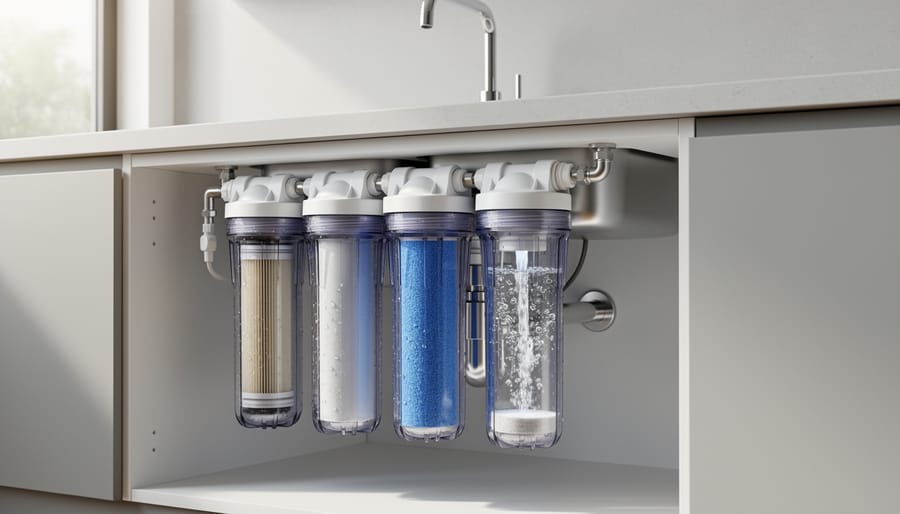
The Science Behind Advanced Filtration Processes
Stage 1: Sediment Removal and Pre-Filtration
The journey to remarkably pure water begins with a crucial first step: removing the largest contaminants before they can compromise your entire system. Stage 1 filtration employs sediment filters, typically made from pleated polyester or spun polypropylene, designed to capture particles like sand, silt, rust, and debris ranging from 1 to 50 microns in size. Think of this stage as your system’s protective guardian, intercepting visible impurities that could otherwise clog or damage the more delicate filtration stages ahead.
This pre-filtration approach delivers multiple benefits beyond just cleaner water. By removing larger particles first, you significantly extend the lifespan of your subsequent filters, reducing replacement frequency and minimizing waste. This translates to lower maintenance costs and a smaller environmental footprint over time. The sediment filter also improves overall system efficiency by maintaining optimal water flow rates throughout the purification process.
For environmentally conscious users, selecting reusable or recyclable sediment filters represents an excellent opportunity to align water quality goals with sustainability values. Many modern systems feature washable pre-filters that can serve your household for years, dramatically reducing single-use filter cartridge waste while delivering consistently reliable performance.
Stage 2: Activated Carbon Adsorption
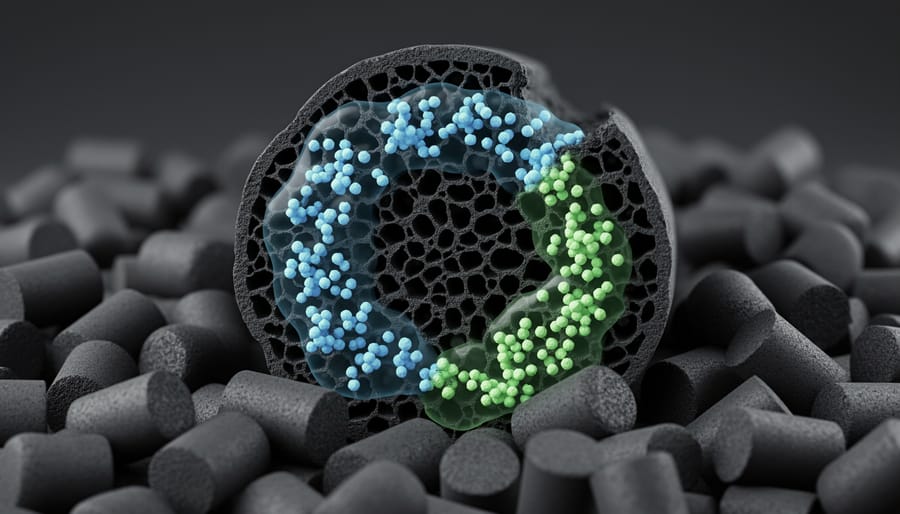
After water passes through the initial sediment filter, it enters the activated carbon stage where chemical contaminants meet their match. Activated carbon filtration works through adsorption, a process where contaminants stick to the surface of carbon particles much like a magnet attracts metal. This happens because activated carbon contains millions of tiny pores that create an enormous surface area within a small space, providing countless binding sites for unwanted chemicals.
This stage excels at removing chlorine, volatile organic compounds (VOCs), pesticides, and other chemical pollutants that affect taste, odor, and safety. The carbon attracts these molecules through weak intermolecular forces, effectively trapping them within its porous structure. What makes this filtration method particularly valuable for environmentally conscious households is its ability to eliminate many synthetic chemicals without requiring electricity or producing wastewater during the adsorption process itself.
The result is noticeably cleaner, better-tasting water that supports both your health and sustainable living goals, transforming chemically treated municipal water into refreshing hydration your family can trust.
Stage 3: Advanced Membrane Filtration
At this critical stage, water passes through semi-permeable membranes that represent some of the most sophisticated purification technology available today. Reverse osmosis membrane processes use extremely fine barriers with pore sizes as small as 0.0001 microns, effectively blocking contaminants invisible to the naked eye while allowing pure water molecules to flow through.
This advanced membrane filtration excels at removing dissolved solids, including heavy metals like lead and mercury, along with fluoride, arsenic, nitrates, and pharmaceutical residues that earlier stages cannot capture. Ultrafiltration membranes, with slightly larger pores around 0.01 microns, target bacteria, viruses, and larger organic molecules while maintaining higher flow rates and lower energy consumption.
The beauty of these membrane technologies lies in their passive filtering action, requiring minimal energy compared to distillation methods. Modern systems incorporate pressure optimization and selective permeability designs that maximize water recovery while minimizing waste, making them increasingly sustainable choices for both residential and commercial applications. This stage delivers water purity that approaches laboratory-grade standards, giving you confidence that your water is genuinely clean at the molecular level.
Stage 4: Final Polishing and Remineralization
The final stage of advanced purification methods serves two important purposes: perfecting taste and restoring beneficial minerals that may have been removed during earlier filtration phases. This polishing step typically employs activated carbon blocks or coconut shell carbon filters to eliminate any residual tastes or odors, ensuring your water is crisp and refreshing.
Many modern systems incorporate remineralization technology, which carefully reintroduces essential minerals like calcium, magnesium, and potassium. These minerals not only enhance flavor but also contribute to your daily nutritional intake and help maintain a balanced pH level in the purified water. This science-backed approach ensures you receive water that’s both pure and beneficial.
From an environmental perspective, this final stage maximizes the value of your filtration investment by producing water you’ll genuinely enjoy drinking, reducing reliance on bottled water. The result is water that rivals or surpasses any commercial product while supporting your sustainability goals. This comprehensive approach to water purification demonstrates how advanced technology can deliver both health benefits and environmental responsibility in one efficient system.
What Advanced Filtration Actually Removes
Advanced filtration systems work through multiple complementary stages to tackle an extensive range of water contaminants, offering comprehensive protection that goes far beyond what standard filters can achieve. Understanding exactly what these systems remove helps you appreciate the remarkable science protecting your health and the environment.
The most sophisticated systems address contaminants across several critical categories. Heavy metals like lead, mercury, and arsenic are effectively captured through specialized media and reverse osmosis membranes. Chemical pollutants including chlorine, chloramines, volatile organic compounds (VOCs), and pesticides are adsorbed by activated carbon stages. Microbiological threats such as bacteria, viruses, cysts, and parasites are eliminated through membrane filtration and ultraviolet sterilization. Perhaps most impressively, modern systems now target emerging contaminants that weren’t even on our radar a generation ago—pharmaceutical residues, microplastics, and endocrine-disrupting compounds that can interfere with hormonal systems.
| Contaminant Category | Health Concerns | Removal Stage |
|---|---|---|
| Heavy Metals (lead, mercury, arsenic) | Neurological damage, developmental issues | Reverse osmosis, ion exchange |
| Chemicals (chlorine, VOCs, pesticides) | Cancer risk, organ damage | Activated carbon, catalytic media |
| Microorganisms (bacteria, viruses, cysts) | Acute illness, chronic infections | UV sterilization, membrane filtration |
| Pharmaceuticals & microplastics | Hormonal disruption, long-term exposure effects | ozone water treatment, reverse osmosis |
The synergistic approach of combining technologies creates redundancy that ensures even trace contaminants are captured. When activated carbon removes chlorine and organic chemicals in the first stage, it prepares water for more delicate membrane processes. Reverse osmosis then captures dissolved solids and heavy metals at the molecular level, while ultraviolet light provides final microbiological assurance without adding any chemicals to your water.
This comprehensive removal capacity delivers genuine peace of mind. You’re not just filtering out what you can see or taste—you’re eliminating invisible threats that accumulate over time. For families with young children, individuals with compromised immune systems, or anyone committed to long-term wellness, this thorough protection represents a meaningful investment in health. The result is water that’s not merely safe by minimum regulatory standards, but truly pure and optimized for human consumption.
Environmental Benefits of Advanced Filtration
Choosing an advanced filtration system represents one of the most impactful environmental decisions a household or business can make. The connection between water purification and planetary health extends far beyond your kitchen tap, creating ripple effects that benefit ecosystems and communities worldwide.
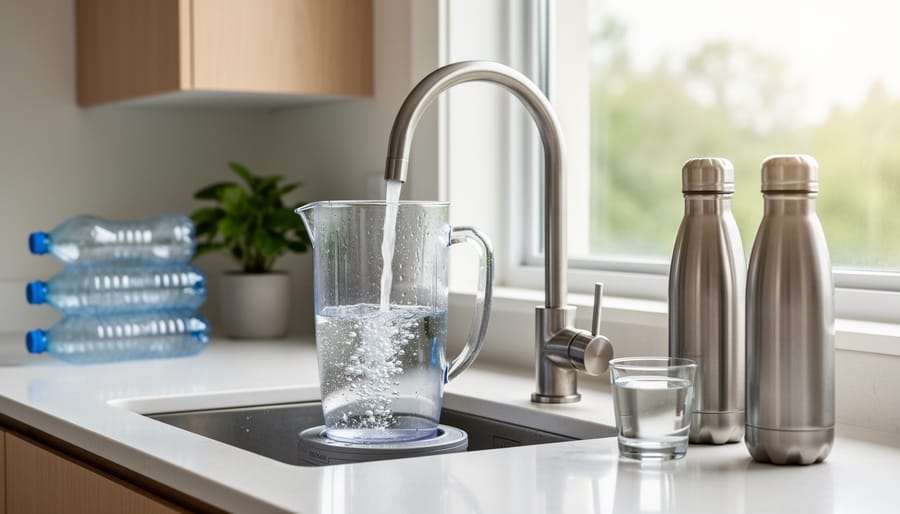
The most immediate environmental benefit lies in dramatically reducing plastic bottle waste. Americans alone use approximately 50 billion plastic water bottles annually, with only 23% being recycled. By installing an advanced filtration system, a typical family eliminates the need for 300 to 500 plastic bottles per year. These bottles, which take over 450 years to decompose, contribute to ocean pollution, harm marine life, and release microplastics into our food chain. Home filtration breaks this cycle entirely.
Energy consumption tells an equally compelling story. Bottled water production requires significant energy resources for manufacturing, transportation, and refrigeration. Studies show that producing bottled water consumes up to 2,000 times more energy than treating tap water with advanced filtration. A single home system can reduce carbon emissions equivalent to taking a car off the road for several weeks annually, demonstrating how individual choices compound into meaningful environmental impact.
Advanced filtration also complements natural water purification processes by reducing demand on overtaxed municipal systems and groundwater sources. When communities adopt home filtration, water treatment facilities can operate more efficiently, requiring fewer chemical additives and less energy-intensive processing.
The financial sustainability aspect deserves attention too. While bottled water costs approximately $1,200 annually for a family of four, advanced filtration systems typically cost $200 to $400 yearly including maintenance. These savings free up resources for other sustainable investments while reducing the economic incentive for environmentally harmful bottled water industries.
By choosing advanced filtration, you’re not just purifying water; you’re participating in a broader movement toward resource conservation, waste reduction, and environmental stewardship. Each filtered glass represents a small but meaningful vote for a more sustainable future.
Choosing the Right Advanced Filtration System for Your Needs
Selecting the right advanced filtration system begins with understanding your household’s specific needs and priorities. The three main categories—under-sink, countertop, and whole-house systems—each offer distinct advantages depending on your water quality concerns, household size, and sustainability objectives.
Under-sink systems provide an excellent balance of performance and convenience for most households. These compact units deliver purified water directly to your kitchen tap, making them ideal for families of 2-5 people primarily concerned with drinking and cooking water quality. They effectively remove contaminants like chlorine, heavy metals, and microplastics while minimizing water waste compared to traditional reverse osmosis systems. Installation typically requires basic plumbing skills or professional assistance, and maintenance involves filter replacements every 6-12 months.
Countertop models offer the most accessible entry point into advanced filtration. These portable systems require no installation, simply connecting to your existing faucet, making them perfect for renters or those seeking flexibility. While they process smaller volumes than under-sink alternatives, modern countertop units incorporate sophisticated technologies including carbon block filtration and ceramic elements that rival more permanent installations.
Whole-house systems represent the comprehensive solution for households committed to complete water purification. By treating water at the point of entry, these systems ensure every tap, shower, and appliance receives filtered water. This approach proves particularly valuable for families with specific health concerns, those in areas with documented water quality issues, or homeowners seeking to protect plumbing infrastructure from sediment and mineral buildup. Some whole-house systems incorporate ozone filtration systems that provide additional disinfection without chemical additives.
- Under-sink systems offer high capacity with minimal counter space usage.
- Countertop models require no installation and provide immediate portability.
- Whole-house systems protect all water sources and extend appliance lifespan.
- Each type significantly reduces single-use plastic bottle consumption.
- Under-sink systems require installation and dedicated cabinet space.
- Countertop units may crowd kitchen work areas and process water more slowly.
- Whole-house systems involve higher upfront investment and professional installation.
- Filter replacement schedules vary by system type and water usage.
When making your decision, consider conducting a home water quality test to identify specific contaminants requiring removal. Evaluate your daily water consumption patterns and calculate long-term filter replacement costs alongside initial investment. The most sustainable choice aligns your household’s actual needs with system capabilities, ensuring you invest in technology that delivers meaningful health benefits while supporting your environmental values through reduced plastic waste and energy-efficient operation.
Maximizing Your System’s Performance and Lifespan
Your advanced filtration system represents a significant investment in your health and environmental stewardship, and proper maintenance ensures it continues delivering exceptional results for years to come. The good news is that maintaining peak performance doesn’t require extensive effort—just consistent attention to a few key practices.
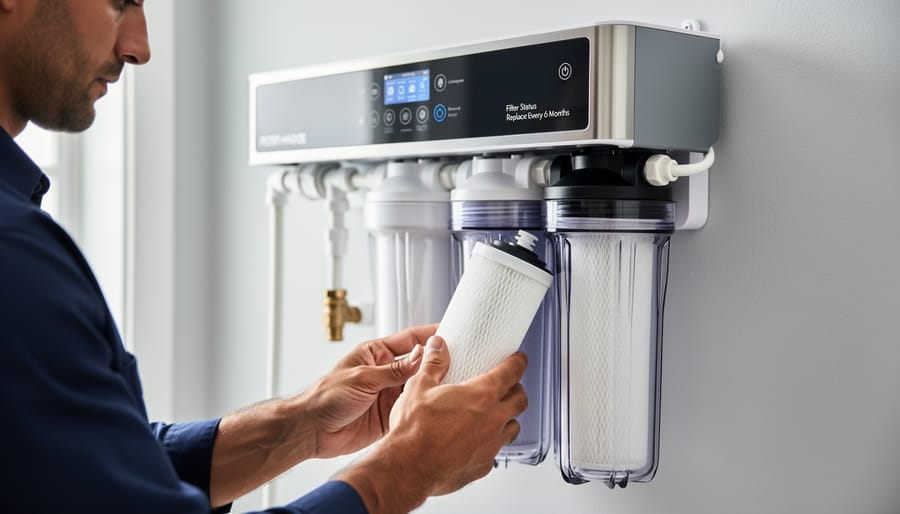
Start by establishing a filter replacement schedule tailored to your specific system and water usage. Most advanced multi-stage systems require pre-filter changes every 3-6 months, while primary filtration media typically lasts 12-24 months. Reverse osmosis membranes, when included, generally need replacement every 2-3 years. However, these timelines vary based on your water quality and consumption patterns, so consult your manufacturer’s guidelines and adjust accordingly.
Regular water quality monitoring empowers you to catch potential issues early. Consider testing your filtered water quarterly using home testing kits or professional laboratory analysis. Monitor key indicators like total dissolved solids (TDS), pH levels, and contaminant-specific tests relevant to your local water supply. This proactive approach not only confirms your system’s effectiveness but also provides peace of mind that your family enjoys consistently pure water.
Implement simple maintenance habits that extend system lifespan. Clean exterior housings during filter changes to prevent buildup. Check for leaks or unusual pressure changes monthly. Keep detailed records of filter replacements and test results—this data helps identify patterns and optimize your maintenance schedule over time.
Remember that timely filter replacement isn’t just about performance; it’s about sustainability too. Saturated filters work harder, consuming more energy and potentially allowing contaminant breakthrough. By maintaining your system properly, you maximize efficiency while minimizing environmental impact, ensuring your investment continues protecting both your household and the planet.
Taking control of your water quality through advanced filtration represents one of the most meaningful investments you can make for both personal wellness and environmental stewardship. By choosing sophisticated purification technology, you’re not simply removing contaminants—you’re actively protecting your family’s health while reducing reliance on single-use plastic bottles and supporting sustainable water practices.
The science behind modern filtration systems demonstrates that clean water access need not come at the planet’s expense. Multi-stage purification processes efficiently remove harmful substances while conserving resources, proving that health and environmental responsibility work hand in hand. As you’ve learned, these systems combine cutting-edge innovation with practical design, making pure water accessible right from your tap.
Whether you’re motivated by health concerns, environmental values, or both, implementing an advanced filtration system empowers you to make a tangible difference. This isn’t just about today’s glass of water—it’s about building a foundation for long-term wellness and contributing to broader sustainability efforts. Every filtered gallon represents a step toward cleaner oceans, reduced plastic waste, and healthier communities. Your choice to invest in advanced filtration extends beyond your household, creating ripples of positive impact for generations to come.