Batch testing means every production lot of a peptide is independently checked for identity, purity, and contaminants, and Canadian buyers can ask to see that paperwork from suppliers like kylo peptides before they buy. Reading a certificate of analysis takes about ten minutes, and the main prerequisite is knowing which results to look for. A credible report ties a specific lot number to specific results, so you’re verifying the exact vial you’ll receive, not a generic claim on a website.
Suppliers treat that documentation as a baseline, not a bonus. The same principle shows up in other fields where purity matters. Clean water providers, for example, have long shown that testing and transparency are what separate a confident claim from a verifiable one.
Key Takeaway: Batch testing means each production lot is independently verified for identity, purity, and contaminants. Canadian buyers can request that documentation before purchasing and check that it matches the lot they’re getting.
Below, you’ll learn what batch testing covers, how to judge whether a supplier’s results are credible, and where to turn for help in Canada.
What Batch Testing Is and Why Peptide Quality Varies From Lot to Lot
What a Batch Test Actually Measures
A thorough batch test, often summarised on a Certificate of Analysis (CoA), looks at several different questions about a lot. Each one answers something distinct, so a single “99% pure” claim never tells the whole story.
| Test type | What it checks | Why it matters to the buyer |
|---|---|---|
| Identity | Confirms the molecule is the intended peptide, usually by mass spectrometry, which measures molecular weight | Shows the vial contains what the label says |
| Purity | Measures what percentage of the sample is the target peptide, typically by HPLC (high-performance liquid chromatography) | Reveals how much of the content is unwanted synthesis by-products |
| Quantity | Verifies the actual amount of peptide per vial | Confirms you receive the stated amount |
| Residual solvents and heavy metals | Screens for leftover manufacturing chemicals and trace metals such as lead or arsenic | Helps confirm that the production process left nothing harmful behind |
| Microbial and endotoxin screening | Checks for bacteria, mould, and endotoxins, which are fragments of bacterial cell walls | Indicates whether the lot is clean at a biological level |
Think of it like a water quality report. One number rarely matters on its own; the full panel gives you a trustworthy picture. Purity percentage is the figure most often quoted, but identity and contaminant results are just as telling.
When you read a CoA, check that the tests listed are actually performed on your specific lot. A thorough document names its methods and shows the numbers behind each result, rather than offering a general pass/fail statement.
Why One Good Result Doesn’t Guarantee the Next Batch
A Certificate of Analysis speaks only for the lot it describes. If a supplier shows you an excellent result from last spring, that tells you how that particular production run performed, not how the next one will.
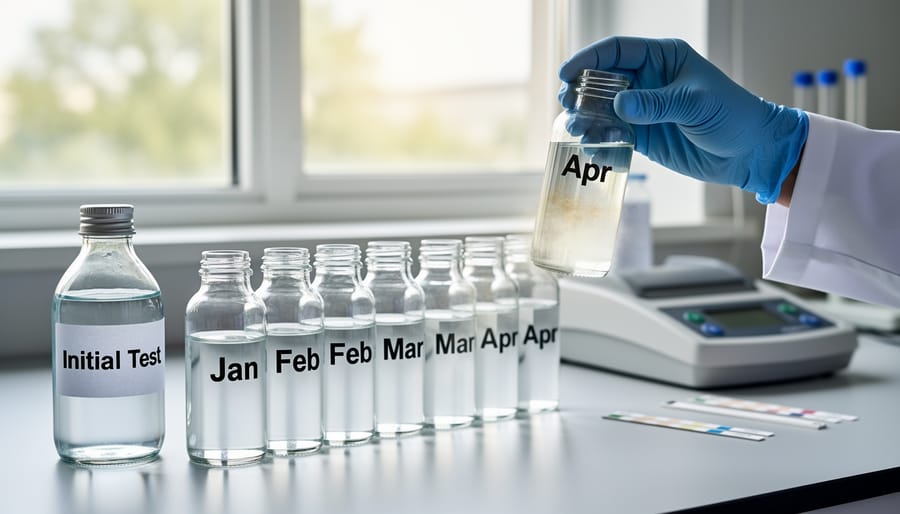
Think about how water quality works. A municipal system doesn’t test its supply once and call it settled. Conditions shift with the seasons, the source, the equipment, and the treatment process, so regular sampling is what catches changes early. One clean sample from a single day simply can’t vouch for the months that follow.
Peptides follow the same logic. Each new run involves its own synthesis conditions, purification steps, and handling. Small variations can nudge purity or contaminant levels up or down.
The constructive takeaway is simple: ask for results tied to the exact lot you’re buying, and make that a habit with every purchase.
Who Should Be Asking for Batch Test Results: Eligibility to Request and Rely on Testing Documentation
Anyone who buys peptides can ask for batch documentation, and several groups have particularly good reasons to. Individual buyers want to know what is actually in the vial. Researchers and academic labs need lot-specific data to keep their work reproducible. Clinics and businesses sourcing peptides carry added responsibility, since they pass products on to others and answer for what they supply. You don’t need special status to make the request. A reputable supplier should be able to provide a Certificate of Analysis (CoA) and lot-specific results without fuss, much like a water utility publishing its quality report.
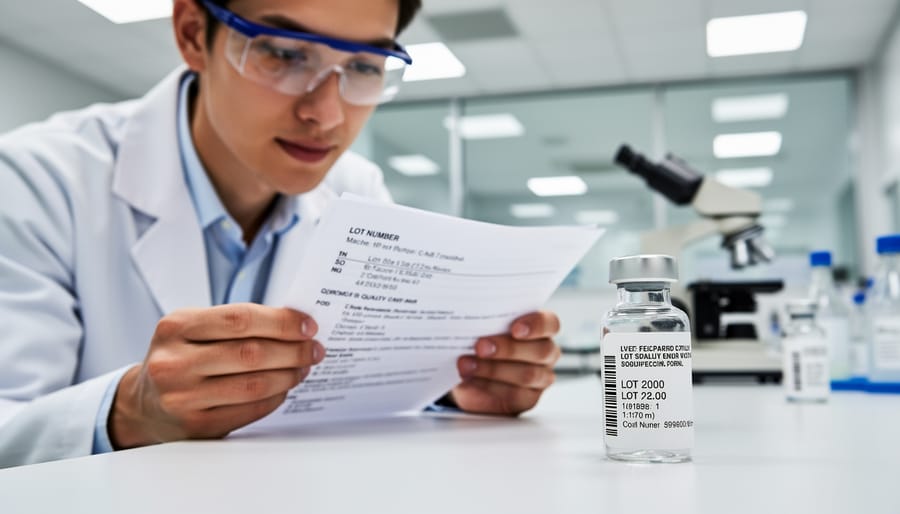
Asking is the easy part. Knowing whether to trust what you receive takes a little more care. Documents vary widely, and the strongest ones show identity and purity checks tied to the exact lot you are buying. A credible CoA generally includes:
- The testing lab’s name, ideally independent and accredited (for example, ISO/IEC 17025).
- A lot number that matches the one on your vial.
- A recent test date.
- The named methods used, such as HPLC or mass spectrometry.
- A purity percentage and confirmation of identity.
- Contaminant results, such as residual solvents, heavy metals, microbial or endotoxin screening.
- A way to verify the document directly with the lab.
If a document is missing several of these, that’s worth a follow-up question rather than an assumption either way.
One more point deserves attention. The regulatory picture for peptides in Canada depends on the product’s intended use and how it is classified, and those details can change. A CoA tells you about the chemistry of a lot. It doesn’t tell you what a product may legally be used for or sold as. Before sourcing, confirm the current status with official sources such as Health Canada rather than relying on a supplier’s description or an educated guess.
Your Rights and Responsibilities as a Canadian Buyer
As a buyer in Canada, you have a reasonable set of rights, and they come paired with a few responsibilities. Knowing both makes the whole verification process smoother.
On the rights side, you can ask any supplier for documentation about the product you’re considering, including a Certificate of Analysis tied to the specific lot. General Canadian consumer protection and labelling principles point toward accurate labels and honest product descriptions, so a seller should be able to explain what the product is, how it was tested, and what the testing shows. If a supplier can’t or won’t answer a simple request for lot-specific results, that tells you something useful. Asking is not rude or unusual. It’s the same thing a careful homeowner does when requesting a water quality report before choosing a filtration system.
Your responsibilities mostly come down to following through. A document only helps if you actually read it, so check that the lot number matches your product, that the lab is independent, and that the results line up with the stated specification. Storage matters too. Even a well-tested product can degrade if it’s handled or kept poorly, so follow the storage guidance that comes with it.
It also helps to understand that intent and legal status matter. Health Canada oversees health products at a general level, and how a product is classified can depend on how it’s meant to be used. Rather than assuming, check the rules that apply to your situation through official channels. Taking these small steps keeps your choices informed, practical, and grounded in evidence.
How to Verify a Supplier’s Batch Testing Step by Step

Verifying a supplier’s batch testing takes only a few careful steps, and each one builds on the last.
1. Request the Certificate of Analysis for the exact lot you are buying. A generic or “representative” CoA doesn’t tell you about your product. Ask for the document tied to the specific batch.
2. Match the lot number on the CoA to the lot number printed on the product label. If they differ, or the label has no lot number, treat that as a reason to pause.
3. Confirm the testing laboratory is independent. A lab with no financial link to the supplier has no reason to shade its results. Look for named methods, such as HPLC for purity and mass spectrometry for identity, and for accreditation like ISO/IEC 17025.
4. Contact the lab directly to verify the report is genuine. Use contact details you find yourself, not only those printed on the document. Reputable labs are usually glad to confirm a report number.
5. Check the test date. Results from years ago, or dates that don’t fit the production timeline, deserve a follow-up question.
6. Compare the results to the stated specification. Does the measured purity meet the claimed figure? Are contaminant screens listed, not just a single purity number?
7. Keep your records. Save the CoA, lot number, and correspondence so you can refer back if questions arise later.
This habit mirrors the principle of safety through testing: confirm first, then rely on the result. A few minutes of checking means fewer wasted purchases and less uncertainty, which is good for your budget and for the planet.
Where to Get Help and Verify Information in Canada
Verification works best when you know who to ask. In Canada, several official and reputable resources can help you check claims, confirm documentation, and get guidance, often at no cost. Think of them as your support network for making informed, evidence-based choices.
| Resource | What they can help with | When to contact them |
|---|---|---|
| Health Canada | Regulatory and health product information, including how products are classified | When you’re unsure how a product is regulated or want to confirm current rules |
| Accredited testing laboratories | Independent analysis and confirmation that a Certificate of Analysis is genuine | When you want to verify a lot’s results or arrange your own testing |
| Standards Council of Canada | Information on laboratory accreditation, such as ISO/IEC 17025 | When you need to confirm a lab’s credentials |
| Pharmacists and licensed healthcare professionals | Guidance on safe use and how a product may interact with your health situation | Before using any product, or if you have health questions |
| Consumer protection agencies | Support with complaints about misleading labelling or unfulfilled promises | When a product or description doesn’t match what you received |
A good habit is to start with the question you’re really asking. Wondering whether a lab’s results are credible? An accredited laboratory or the Standards Council of Canada can help you check. Unsure about a product’s regulatory status? Health Canada is the authoritative place to look, and rules can change, so confirm current details directly.
For questions about use, a pharmacist or licensed professional brings personal context that no document can. If something goes wrong, a consumer protection agency gives you a clear path to raise it.
Each of these steps reflects the same principle behind clean water: trust grows when claims can be independently checked.
Common Questions About Batch Testing Peptides in Canada
Buyers often ask the same handful of things when they start checking supplier documentation. Here are calm, practical answers to the most common ones.
Is a Certificate of Analysis the same as batch testing?
Not exactly. Batch testing is the lab work done on a specific production lot, and the Certificate of Analysis (CoA) is the report that summarizes those results. A CoA is only as trustworthy as the testing behind it, so check who ran the test and whether the lot number matches your product.
Can I pay for my own independent test?
Yes, many buyers and researchers send a sample to an accredited third-party laboratory for analysis. Ask the lab which tests it offers, what accreditation it holds, and how it handles sample submission before you commit.
What does a purity percentage really tell me?
It shows how much of the sample is the target compound compared with detectable impurities, usually measured by chromatography. It does not tell you about quantity, contaminants like heavy metals or endotoxins, or whether the result applies to other lots.
What should I do if the CoA doesn’t match my lot number?
Pause and ask the supplier for the correct lot-specific document. If you can’t get a clear answer, treat the result as unverified and consider contacting the testing lab directly to confirm the report exists.
Keeping a simple record of each CoA alongside your purchase details makes these questions much easier to answer later, and it builds the same habit of transparency that good water testing relies on.
Lot-specific testing comes down to one idea: confidence should rest on evidence, not on assumption. A household checks its water because the results show what is actually flowing from the tap, and a careful peptide buyer can apply the same logic to every lot. A Certificate of Analysis that matches your lot number, comes from an independent and accredited lab, and reports clear results against a stated specification tells you something a label alone never can.
The good news is how simple the habit is. Asking a supplier for documentation costs nothing. Matching a lot number, checking a test date and contacting a lab to confirm authenticity are small steps, and each one cuts down on waste, uncertainty and guesswork. They also reward suppliers who are open about their testing, which nudges the whole market toward better transparency.
Canadian buyers have solid support for this. Health Canada, the Standards Council of Canada, accredited laboratories and licensed healthcare professionals can all help you confirm the rules and read the results. Regulations and classifications can change, so it’s always worth checking current guidance with official sources before you buy.
Choose the products and suppliers that can show their work, keep your records, and trust the science behind the numbers. Informed choices come from verified information, and every question you ask makes it easier for the next careful buyer to do the same.